Thursday, April 10, 2014

Fossilized Palm Fronds Discovered in Jerusalem

This is what the palm fronds found by Dr. Samuel Adamson and his team were like before they were fossilized. Continue reading to learn more about the discovery.
OK, our latest story doesn't exactly take place in Riverville, but since it stills concerns a resident of Animal Adventures Inc., I decided I should bring it up to my readers anyway. Just last Tuesday, our resident paleontologist Dr. Samuel “Sam” Adamson and his wife Dr. Indiana Adamson were with their fossil hunting team in the Middle East where a recent dinosaur discovery took place. While the discovery of dinosaurs in the Middle East was exciting for the pair, their next discovery would totally take them by surprise. Their group was making a brief stop in Jerusalem when they came across a surprising discovery in their hotel's basement – fossilized palm fronds! You can bet my trusty, junior photographer, Daniel P. Smithwater and I were at Animal Adventures Institute in a flash to interview the Adamson's.
“I went into the basement to help one of my team members bring some extra chairs to our room,” says Dr. Samuel (it wasn't one of those hotels with room service), “but when I was about to lift a chair, I noticed some peculiar stone slabs stacked up in the corner of the room. . . that's when I realized that I'd stumbled on an amazing discovery.” He drew his teammates attention and the two of them began studying the stone slabs and realized that some of them possessed what looked like fossilized palm fronds, while the others were palm frond imprints. The two men got curious and questioned the hotel's manager. He told them that they had been collected by some local teenagers looking for extra cash. The manager figured they might be worth keeping, so he bought them.

After learning about the palm fronds value, Dr. Samuel was able to buy all of the stone slabs to have them more thoroughly and learned some more about where they were found and to their origin. The team of paleontologists finally located where the slabs were found – the slabs were found on a Jerusalem street. Since there were never enough palm trees along the street to produce this many palm fronds, this made the scientists think that they were brought here and laid upon the street. This is when they recalled a certain section of Bible scripture: Luke 19:29-44. In this part of his book, Luke records a time when Jesus Christ rode into the streets of Jerusalem on a colt. Many of the city's residents praised Jesus and sang “Blessed is the King Who comes in the Name of the Lord! Peace in Heaven and glory in the highest!” They also laid palm fronds on the ground as He walked to Harold his arrival into the city. It wasn't much later when many of these same Jews wanted Jesus crucified on a cross.

“Now understand, we're not archaeologists,” says Dr. Indiana. “We're paleontologists, those are scientists who study ancient animals. Archeology is the study of ancient humans. Those are the scientists that would normally study things like this. Of course, without any archaeologists on our team, it was up to us to get clues from the scene.” Indiana explained that if these are the palms were indeed from Jesus' arrival into Jerusalem, then something must have happened to quickly cover them up in order for them to fossilize. “We believe it rained and mud covered up the palm fronds. We know these palm fronds couldn't have been exposed for too long, because otherwise they would have rotted extremely quickly.”

After they'd retrieved all the information from the site they needed, the scientists took their stone slabs, notes and supplies back to the U.S. to be studied by real archaeologists at the Riverville Museum of Natural History. They found that the paleontologists were correct that these palm fronds were probably from Jesus' arrival in Jerusalem. Other then the location of their discovery, a major clue is the age of the palm fronds: they're around 2,000 years old – that's about the time Jesus walked the earth!

“This brings up two things to my mind,” says Dr. Samuel. “The first thing is that it doesn't take millions of years for objects to fossilize, contrary to popular belief. They just have to be buried quickly and/or be in the right conditions. This isn't the first time something has fossilized in a short length of time – hats, hams and water wells are objects that have been known to fossilize in less than 100 years!”

Indiana was especially glad to be part of this amazing find, as she's quoted for saying, “I'm just glad I could take part in the discovery and investigation of the fossilized palm fronds. It also really brings to life what was really going on during the last days of Jesus' life on earth. People were praising and glorifying Him as He strode into Jerusalem on a donkey, but all too soon, Jesus was arrested for crimes He never committed. Many of the Jews who had praised Him and laid palm fronds at His feet were probably some of the same Jews who wanted Him dead. This amazing discovery also reminds me of the price Jesus paid for us to have eternal life. He was beaten, spat on and whipped. And as if that wasn't enough, He was led along a road – Dela Rosa, also known as “The Road of Suffering” – carrying His own cross. He was crucified on that cross to take our penalty for our sins, but three days later – on Easter – He rose again! That's what I think makes this discovery so thrilling for me personally.”

Written by: Mr. Smiley
Photographer: Daniel P. Smithwater
Edited by: Christian Ryan

Weekly Cartoons


Next Issue:Unknown

Thursday, April 3, 2014

AAI.'s Hodge Podge Garage Sale

Mrs. Corythosaurus and her daughter Morgan decide what they should sell at AAI.'s garage sale while Mr. Parasaurolophus packs up items in the background.
If you think your room can get messy, well, you haven't seen messy until you've seen the kinds of messes some of the residents at Animal Adventures Inc. (AAI.) can make! Check out my co-writer Lizzy the Lizard's apartment when it gets messy! Sometimes the residents' (animals and humans alike) apartments can get very cluttered with stuff. The reason being? Frankly AAI. doesn't have the kind of places where residents can drop off unused or unwanted items so they sort of add up after a while. Sure, they often trade with one another and give things away, but it still doesn't solve the problem.

This is when AAI.'s first ever Hodge Podge Garage Sale comes into play! To find out more, my trusty, junior photographer, Daniel P. Smithwater and I went to AAI.'s founder, president and the the brains behind the idea, Nigel Milligan. Nigel's quoted for saying, “After a while, everyone just needs to get rid of stuff. I for one need to clean out my basement. I was looking down there the other day for some files I needed and I found them inside a pizza box dated 2012! As if that's not bad enough, there was actually pizza inside . . . can't say it would taste very good to me, but Rack-Coon, our head chef, doesn't seem to think it tastes that bad. But that's because raccoons are often known for climbing into dumpsters to retrieve food. Fortunately, he doesn't use what he finds in the trash to make other people's dishes when he's cooking.”

The Garage Sale is going to take place on April 12th, 2014 right on AAI. property in front across from Mary's Mall. Even though it isn't until next week, many animals and humans are already preparing for the event; they're gathering things they plan to give away. The local hadrosaur (or duck-billed dinosaur) family – consisting of Para the Parasaurolophus, his wife Graciela the Corythosaurus and Morgan their daughter – is one great example. We had the opportunity to get an exclusive interview with the family. “I know it's almost a week away,” says Cory as she packs some stuff into some boxes, “but this is really a big event for us hadrosaurs! We hardly ever have the chance to clear out stuff like this. I hope . . . [I'll] finally be able to get rid of this bed set that I got for my birthday. I really like it, but it's really made for a human being to lie on, hon. This little thing isn't going to support my two-ton weight. Add my 2.5-ton husband to that and you've got a broken bed frame. Better give it to someone who can use it.” Morgan is also excited about the possibility of getting rid of some things. “To tell you the truth,” Morgan whispers, “my Mom's a bit of a packrat, so any opportunity we get to give away stuff we need to take. For the past several years she's been holding onto her the first pot she ever cooked with. Seriously! The whole thing's pretty warn because I'm pretty sure it's cheaply made.” At that moment, Morgan tried to slip the pot into a box of things to give away when a loud foghorn-like noise from the kitchen alerts us to the fact that Morgan's been busted in the act. “Morgan! How many times do I have to tell you?” she exclaims. “I can't get rid of the first pot I ever cooked in! Tell ya what hon, put that back on the kitchen counter.” Morgan looked at me and said, “See what I mean?”

Animals aren't the only creatures hoping to give away unwanted stuff. Dr. Steve Stevenson at AAI.'s Animal Adventures Institute and his assistant Oliver Oviraptor are also boxing up stuff to give away at the garage sale. Dr. Steve is quoted for saying, “Some of the equipment in my lab is old but still works. I'd love to use it, but I simply can't because my system's too new for some of the equipment to handle and they don't work together well. I have some scientist buddies who live nearby who would be most happy to use this stuff. They've got older laboratory systems that will work with the old equipment just fine.” That's not the only equipment that's going to be given away: Oliver Oviraptor says that they have loads and loads and loads of plastic eggs in their storage center, so many that they aren't quite sure what to do with them all. “We use plastic eggs to inject dinosaur embryos into that will grow to be too large to fit grow comfortably inside the egg off a living species of animal. These plastic eggs are specially designed to function almost like real eggs and they really come in handy when we're cloning sauropods. Sauropods laid some of the largest eggs ever to be laid on the planet! Some sauropods hatch out of eggs the size of soccer or footballs! Unfortunately, now we have too many eggs and not enough dinosaurs to hatch. So when Dr. Steve invites some of his scientist friends to the garage sale, we'll give tons of them away. That's a fact!”

Nigel believes that the garage sale was a great idea and many more AAI. residents than the ones we interviewed will be participating. “With well over 700 animals and less than a hundred humans,” Nigel says, “I believe we'll have a huge turnout . . . hopefully Rack-Coon can prepare enough food . . .”

Written by: Mr. Smiley
Photographer: Daniel P. Smithwater
Edited by: Christian Ryan, Joy Hammond

*Advertisement*

We here at Smiley’s News, I have been working night and day to get articles ready. I could really use some help! So we are looking for people interested in writing (especially kids and teens). If you are interested, PLEASE(!) send an email to animaladventures@aol.com and save me from working night and day! I’m exhausted!


Weekly Cartoons


Next Issue: Fossilized Palm Fronds Discovered in Jerusalem

Thursday, March 27, 2014

Planting Time at Mac Dee Dee's Organic Farm

During this time of year, the cows at Mac Dee Dee's Organic Farm are calving, but that's not the only thing they do during springtime. Keep reading to find out what planting time is like!
Last fall, my trusty, junior photographer and I, Daniel P. Smithwater and I went to Mac Dee Dee's Farm during the harvest time to see what kind of operation Mac Dee Dee goes through when it's time to bring in the fruits of his and his helper's labors. But guess what: in order to harvest, you have to make something to harvest! During springtime, Mac Dee Dee's farm is already busy preparing for fall's harvest. So Daniel and I went back to Mac Dee Dee's farm to learn all about what Mac Dee Dee does to prepare for fall.

“We like to start our sowing nice and early,” says Mac Dee Dee. “Starting early has its advantages . . . I [always] know when it's time to start planting and other spring activities when the cold weather finally looses its winter grip, the snow melts and the length of the day increases. That's when I know it's time to begin.” This year, they started harvesting on March 4th. When we arrived at the farm, Mac Dee Dee was all too happy to show us his spring operations. First, he showed us the pastures where the cows are kept. As you might recall from our previous articles, the cows and other animals are kept in wide open areas on the 50,000 acre farm, unlike many farms where the animals are kept in cramped, dark and hideously smelly conditions where they never see the light of day or get the chance to feel grass beneath their feet.

The farm also has a lot of cows and other animals giving birth this time of year. Mac Dee Dee's wife, Jules Dee Dee explains, “During the springtime, we reg have our cows tested to see if their pregnant and normally we'll allow them to just give birth naturally in the field, just like their ancestors would have done in nature.” One of the cows, she went on to explain, would have had some birthing problems if she'd been allowed to give birth naturally and without a farmer's assistance, so the farmers brought her into one of the birthing barns and we got to watch the cow give birth to her newborn!

Then Mac Dee Dee led us to the fields used for planting corn and other crops. Man are they expansive! Mac Dee Dee is reported for saying, “When it's time to plant corn and the other 'field crops' as we call them (including soybeans, wheat and rice), we fly our planter-planes out low over the fields and they spray the seeds out over the field.” Now, what most farmers will do after seeds are sprinkled over the field is use planes to spray pesticides and other chemicals (actual chemicals) over the seeds! Pesticides are used to keep pests away from the crops and other chemicals farmers often spray is used to make the crops grow bigger and faster than they would naturally. Not only are these pesticides bad for the soil (as it seeps into the soil, eventually reaches water sources like rivers and lakes and flows into the ocean), but it's also bad for our bodies when we consume the chemicals with the food we eat. Mac Dee Dee's Farm doesn't use pesticides and other chemicals because they're a 100% organic farm, thank goodness! This made me curious as to how they keep pests away. When we asked Mac Dee Dee, his response was, “Well, there are numerous other ways to keep pests at bay than using nasty pesticides. God already has plenty of pest-eating creatures in nature that help us farmers that we encourage to come around. Ladybugs are a perfect example . . . aphids are tiny insects [that] like to like to suck the fluids out of plants, causing them to sicken. Ladybugs eat aphids! And that's just one example of a pest-eating creature. There are plenty more.”

Mac Dee Dee's crops will continue to grow taller as spring turns into summer until it's time for harvest once again. Before leaving the farm, Mac Dee Dee showed us the part of the chicken coop where the hens lay their eggs. Of course, Mac Dee Dee's chicken coop isn't the size of your average chicken coop – it's way larger to accommodate the hundreds of meat, breeding and laying birds. “They lay their eggs all year-round,” says one of Mac Dee Dee's sons named James. “Like the other animals, we like to let the chickens and turkeys roam around the whole farm except during the really cold parts of winter. We don't have to come out everyday into the coop to check whether or not the hens have laid eggs because we built special sensors into each of the custom-made nesting boxes and they let us know when the chickens have laid.” The chickens seem pretty happy sitting on their nests in the chicken coop. If they knew Easter was around the corner, they might not be so happy!

Mac Dee Dee's Farm is one of the largest 100% organic farms in the entire United States and it takes a lot of work to run it, especially when it's planting time. “Tiring as it is at the end of the day,” Mac Dee Dee says, “the thought that people are happier and healthier because of the way we raise our crops and animals makes me feel great inside, and I thank God for that.”

Written by: Mr. Smiley
Photographer: Daniel P. Smithwater
Edited by: Christian Ryan, Joy Hammond

*Advertisement*
We here at Smiley’s News, I have been working night and day to get articles ready. I could really use some help! So we are looking for people interested in writing (especially kids and teens). If you are interested, PLEASE(!) send an email to animaladventures@aol.com and save me from working night and day! I’m exhausted!


Weekly Cartoons


Next Issue:AAI.'s Hodge Podge Garage Sale

Thursday, March 20, 2014

What a Big Crest You Have, Mr. Hadrosaur!

It is now known that at least one species of Edmontosaurus had a fleshy crest on its head.
Edmontosaurus has long been described as a large, crestless duck-billed dinosaur, or hadrosaur. This family of dinosaurs is known for the beautiful and probably vibrantly colored variates of crest shapes they have; each species has its own its own crest. Some hadrosaurs such as Parasaurolophus has a long tube-shaped crest extending out of the back of its head and Lambeosaurus has a fan-shaped crest. But hadrosaurs like Edmontosaurus were crestless . . . or so paleontologists thought! This was until one well-preserved specimen was discovered in December of last year by paleontologist Dr. Samuel Adamson.

As many of you know, paleontologist Dr. Samuel Adamson and his team dig dinosaur fossils out of the ground each year and they are shipped back to Animal Adventures Institute (AAI) where they are cleaned so that they can either be thoroughly studied, or to be used in the miracle of cloning these extinct creatures back from extinction. The geneticist Dr. Steve Stevenson is in charge of the lab operations. For many years, Dr. Samuel and the rest of his team have been finding fossil bones of the extinct hadrosaur dinosaur Edmontosaurus in the hopes of bringing clones back to life, but so far, every single one of these specimens have been not yielded even a fraction of DNA. But what Dr. Samuel did find would totally rock the world of paleontology! “It was really quite depressing,” Dr. Samuel says, “most of the dinosaurs we've ever uncovered are Edmontosaurus and yet not one of them has DNA useful for cloning them! I had no idea why on earth this could be . . . I mean, we haven't found all that many T. rex specimens and yet we've found a large bit of DNA in them! Go figure! But that's when I made a remarkable discovery.” Dr. Samuel and his team uncovered the almost complete and fully articulated skeleton remains of an Edmontosaurus at their dig site in Alberta, Canada. Though they were excited about evidence suggesting that skin impressions of the dinosaur had also been preserved with the skeleton, they weren't prepared for what they'd discover next. I thought this would be the perfect story for this week, so my trusty, junior photographer, Daniel P. Smithwater and I, went to the lab for an exclusive interview.

When dinosaur bones are brought out of the field, they are sometimes left encased in the rock they were found in to avoid damaging them and are covered in plaster. This plaster is removed bit by bit once the specimen reaches the laboratory. When one of Dr. Steve's lab assistants was cleaning off the skull of Dr. Samuel's Edmontosaurus specimen, he noticed that dinosaur skin and flesh had been preserved and fossilized on top of the dinosaur's head. “I wasn't quite sure why this fleshy stuff was on top of the dinosaur's head,” says the lab assistant. “At first, I thought that maybe it only looked like it was attached to the dinosaur's head, but no, this flesh was actually there when the dinosaur was alive!” He called to Dr. Samuel to come take a look and sure enough, the dinosaur had fleshy growths on its head.

The fleshy growth was a crest, sort of like the ones Edmontosaurus' relatives had, but instead of being made of bone, it was made of flesh! “This was remarkable!” Dr. Samuel exclaimed with glee. “I mean, this is the kind of thing you expect in paleontology! Normally we only find the mere fossil bones of these creatures, but sometimes we also find fossilized skin. However, I never expected to find anything quite like this. Edmontosaurus has been known to scientists since 1917, and we've only just start scratching the surface at what these animals looked like in life.” Another scientist said that the discovery was like the “equivalent to discovering for the first time that elephants had trunks”; elephants have no bones in their trunks, just over 100,000 muscles (no wonder they're so strong!). So naturally, if only elephant skeletons had been discovered and we had no living ones to go by, we'd probably think elephants lacked trunks. It's almost the same thing with Edmontosaurus!

Another thing Dr. Samuel's team knows is that the dinosaur must have been covered very quickly in order for its crest to fossilize. Many secular paleontologists believe that after most dinosaurs that we find as fossils today died, they were slowly covered with sediment and after millions of years of being underground, they were fossilized. But this (and countless other) specimens don't fit this idea. Why? Dr. Samuel explains, “Animals can't just lie around in order to be fossilized! They'll decay, get picked over by scavengers or bacteria will ruin them. No, in order for something to fossilize, it has to be buried very quickly. I believe that most – if not all – dinosaur fossils were actually catastrophically buried by the rough turbulence during the Genesis Flood, which happened about 4,350 years ago.”

Now that we know at least one of the two known species of Edmontosaurus had a crest, what was it used for? Dr. Samuel is quoted for saying, “Other hadrosaurs had bony crests that were filled with channels which were connected to the animal's nasal passages. Now, until recently, dozens of theories had been presented over the years about the use of their crests. Some examples include: helping to improve its sense of smell, combat, or perhaps that they used their crests as snorkels. We know believe that their crests were used to make tuba or horn-like sounds to communicate.” Edmontosaurus' crest, however, is fleshy and not filled with hollow channels, so it couldn't have used it to make sounds. “Perhaps,” Dr. Samuel suggests, “Edmontosaurus was using its crest for display purposes; a modern lizard known as the Basilisk, has a very similar shaped crest (just look at the crest of our Smiley's News reporter Lizzy the Lizard in our “About our Writers” section for comparison!) and they use their crests to attract a mate. Maybe Edmontosaurus did the same thing.” This hadrosaur probably lived in herds and the crest would have also been useful in signally other herd-mates.

True, the awesome Edmontosaurus specimen Dr. Samuel's team discovered didn't bear DNA for cloning, but it did give them some insight into what this dinosaur looked like and how it might have behaved. Dr. Samuel also begins to wonder if other dinosaur species also had similar fleshy crests or growths on their heads and/or bodies. “After all,” he concludes, “most of the remains of dinosaurs we find are fossil bones, so we have no way of knowing whether other dinosaurs also had similar features to the Edmontosaurus. We we still have a lot to learn about these incredible creatures that went extinct so many years ago.”

Written by: Mr. Smiley
Photographer: Daniel P. Smithwater
Edited by: Christian Ryan, Joy Hammond

*Advertisement*
We here at Smiley’s News, I have been working night and day to get articles ready. I could really use some help! So we are looking for people interested in writing (especially kids and teens). If you are interested, PLEASE(!) send an email to animaladventures@aol.com and save me from working night and day! I’m exhausted!


Weekly Cartoons


Next Issue: Planting Time At Mac Dee Dee's Organic Farm

Thursday, March 13, 2014

Lizzy and the Riddler pt. 3

Jack (background, left) and Lizzy (foreground left) meet Jack's uncle at the Mississippi River to solve the riddles Lizzy keeps receiving.
Well it just so happened that Jack the jackrabbit had an Uncle in Mississippi so both he and I hopped onto a plane and headed over there.
“He lives a few miles from the Mississippi river” he added, as our plane took off.
“Wow what a coincidence” I said, sarcastically.
Since Mr. Smiley wasn't in his office, I left a note on his door saying that Jack and I were going on a hopefully quick journey in order to retrieve something. I knew as soon as we arrived in Mississippi that this was not going to be a good day.
“Hello Jackie!” greeted an elderly rabbit wearing a straw hat and a Hawaiian shirt.
“Hey Tyrone” Jack said, grabbing his luggage.
I stare at him in awe.
“Tyrone?” I asked, “that's not very...rabbitish.”
“Rabbitish?” Jack laughed, “that's not a word.”
“Well it is now” I mutter, “So can we just go to the river now?”
Jack took the front seat so I had to sit in the back with a bunch of...was these teeth bones?
“What time is it?” I asked, hoping to get to the lake and be done with this little quest.
“It's five” Mr. Tyrone informed me, jerk the wheel to the right on his jeep.
“Good that means that we can go visit the lake...now” I stressed.
Jack just laughed, “It's 5p.m. Almost supper time.”
My cheeks turned red, I knew that. I just needed to get the lake. How come Jack was being so annoying? I guess the world will never know. We arrived at his Uncle's house and I got settled into the guest room. Jack had to sleep out on the couch in the living room, HA serves him right. That's when I feel guilty because he is just trying to help me after all. Then again I did tell him I didn't need his help. For dinner we had um...I think it was carrot soup...I hope.
The next day, Jack and I went to the river.
“Well um where exactly do you think we would find the clue?” Jack asked, looking around on the bank.
“I don't know..It will just pop out...” I answer and suddenly a piece of paper flies into my face.
Jack starts to laugh as I grab the paper.
“Okay that was no cool” I said, looking at the paper “This is...so cool!”
Jack looks at me really confused. I quickly show him the paper.
“It's another riddle” he exclaims out loud, “That guy is genius!”
I look at him real suspicious.
“How do you know it's a guy?” I asked.
“Um I don't know...I just assumed...” he quickly gets distracted, “okay the riddle says, 'Weight in my stomach, trees on my back, nails in my ribs, it's feet I lack. What am I?”
“Oh nails in my ribs...that sounds horrible” I commented, looking out into the river “Oh wait I get it...I think.”
“What do you think?” Jack asked, “I know the answer.”
“It's a ship...or a boat either one...um weight in my stomach is the cargo. The trees on my back is the boards on the deck. Nails in my ribs is...um the nails to hold the boards together and the it floats or sails so it doesn't have feet.” I respond, quickly.
Jack leads me to a nearby harbor and finished talking to some man.
“We need to rent a boat” Jack nodded, “Do you have any money?”
My eyes widen and then my checks start to feel warm again.
“You didn't bring any money?” He asked, shocked “what kind of animal are you?”
“A lizard” I smile in response, “uh I brought my credit card but...no cash.”
Jack fished out his wallet and handed the man thirty-five dollars.
“Doesn't your uncle own a boat?” I asked.
“Yes and no” Jack admitted, “It's getting some repairs.”
“I'll pay you back when we get home...to New York” I add, meekly.
Jack unties the boat from the harbor and then we take off. It was only a few minutes when we started to repeat our conversation from before.
“Well um where exactly do you think we would find the clue?” Jack asked, paws on the steering wheel.”
“I don't know” Lizzy exclaimed, “It will show up.”
“Buoy ahoy!” Jack yelled suddenly.
“What?” I asked, confused.
Jack points to something in the river. I lean over but as I do the boat hits a wave and I nearly take a dip in the water but luckily my foot got caught in a net.
“Um...I think the riddle may be over there” I confirm as Jack sails the boat over.
I lean over and grab the buoy and untie a piece of lamented index card off it.
“It says, getting closer. One more riddle then your gift is yours” I read as Jack came over, “What's always coming, but never arrives? And Sometimes I'm high and sometimes low, and I creep between your toes. My orders come from the sky, I make men fall and rise.”
Lizzy sat on the deck and started to think. These riddles were getting a little annoying, She just wanted to go home and give Mr. Smiley his present.
“Well I've heard the first one” she stated “It's tomorrow. So that must mean we have to look for the next riddle tomorrow. But where...er when?”
Jack kept the boat steady as they headed back to the dock. The man who let them borrow the boat came running to them.
“It's a good thing you returned when you did,” he said gasping for breath.
“Why?” Jack asked.
“Because the tide is coming in and I'm afraid this dock is just a little to low” he responded, “you would've gotten lost!”
“Ah ha!” Jack exclaimed, snapping his finger, “It's the tide.:
Both the man and Lizzy looked at him confused,
“The answer to the second riddle is tide” Jack said, confidently “I assume that we need to come back here tomorrow when the tide is low.”
Jack and I headed back to his Uncle's house.
“Aw rats” I announced, upset.
“What?” he asked, caught off guard.
“Low tide...” Lizzy answered, “either the next riddle is under water or...Mr. Smiley's present is.”
“And?” Jack asked, as he opened the door to the house.
“Mr. Smiley's present isn't waterproof....and I didn't bring my bathing suit.” Lizzy added.
Jack just smiled and they hurried inside.
“What? What's so funny?” Lizzy asked, “why are you grinning.”
Jack struggled to keep a straight face as he looked back at Lizzy.
“Oh nothing,” he replied casually. 

Written by: Lizzy the Lizard
Photographer: Daniel P. Smithwater
Edited by: Christian Ryan, Joy Hammond & Mr. Smiley

*Advertisement*

We here at Smiley’s News, I have been working night and day to get articles ready. I could really use some help! So we are looking for people interested in writing (especially kids and teens). If you are interested, PLEASE(!) send an email to animaladventures@aol.com and save me from working night and day! I’m exhausted!


Weekly Cartoons


Next Issue: What a Big Crest You Have, Mr. Hadrosaur!


Thursday, March 6, 2014

The Cretaceous Dinosaur Runway

Dr. Samuel Adamson and team recently discovered a "Cretaceous Dinosaur Runway" where dinosaurs ran to escape the waters of the Genesis Flood.
An amazing paleontological discovery has recently taken place on the outskirts of Moshcops, Utah, not too far from Animal Adventures Inc. (AAI.) The discovery? How about a full-scale dinosaur trackway over what is now desert? When I heard about the discovery, my trusty, junior photographer, Daniel P. Smithwater and I, went to the site to get an exclusive interview with the head of the team responsible for “digging up” the discovery: Dr. Samuel Adamson, the head paleontologist at Animal Adventures Institute at AAI. Dr. Adamson is quoted for saying, “There are a number of ways we can know about those extinct creatures otherwise known as dinosaurs. The most famous way is through fossils – stone copies of long dead bones. It's . . . [quite] easy to forget that these were once living animals.” He went on to explain that fossils are helpful in determining the size, age, weight and etc. of the creature in question, but most times, they don't tell you anything about their behavior. That's why trace fossils are so important. Trace fossils are fossils that aren't actual dinosaur bones, such as fossilized skin and skin imprints, eggs and nests, and of course, dinosaur footprints. The recent footprint discovery represents nearly 100 feet of dinosaur action – a snapshot of what was happening during the time when they were alive. “The fossil trackway was recently uncovered thanks to the unseasonal rain we've been having,” says Dr. Adamson. “It was discovered just last Friday by an 18-year old named Timothy Simmons, who was taking his dog, Sparky, on a walk at the time. So he gave us a call and we came over to investigate. At the moment, the rest of the dig team and I are just uncovering the dirt, rock and sand that wasn't uncovered by rain from around the footprints.” When asked what exactly was happening with the trackways, Dr. Adamson replied, “Well, as you all know, dinosaur footprints were formed during the Genesis Flood (described in Genesis chapter 5-8) around 4,350 years ago by dinosaurs that were trying to escape the horrific and catastrophic floodwaters.” Then, we asked the paleontologist how on earth the Flood could have preserved fossil footprints. “I actually get asked that question a lot,” he says. “What a lot of people don't know about the Flood is that the water didn't rise simultaneously all over the planet. No way! The water – most of which coming from the 'fountains of the great deep' as the Bible explains, but also from the torrential downpour – rose higher in certain places thanks to factors such as the tide. Sometimes, the water would temporarily fall and leave behind sandbars. Dinosaurs and other animals, trying to escape the running water, would have fled to higher ground within their environments and would end up being left on the sandbars as the water continued to rise, leaving their footprints in the soft sediment.” Dr. Adamson continued to explain that, “The type of sediment on the sandbars would have been different than the sediment in the muddy floodwater, so when the sandbars were covered with water again, they'd preserve the footprints perfectly.” Wow! Why don't they normally portray Noah's Flood like that in many Sunday Schools? Anyway, back on topic! After telling Daniel and I about how fossil dinosaur footprints were formed during the Flood, Dr. Samuel and his wife, Indiana Adamson, took us on a little tour of the trackway site. The sight was amazing! Dinosaur tracks – probably from many tens of individuals, if not many more – quite literally littered the ground. There were many different types of dinosaurs that made these tracks, but they appeared to all be heading in the same direction – they were trying to escape the Flood. “We have quite a few different species of dinosaurs here,” says Indiana. She told me that a nearby geological rock formation bearing dinosaur fossils was nearby and knowing the dinosaurs that lived there would help the paleontologists guess what species of dinosaurs the footprints belonged to. “Let's see,” says Indiana, “. . . if you look at this large footprint here . . . I think this is from a member of the ceratopsid, or horned dinosaur, family. Now there were quite a few different species of ceratopsians in this part of Utah. Some prime examples would be Diabloceratops, Torosaurus and a newly discovered species, Nasutoceratops. Nasutoceratops was a weird dude! Instead of your typical Triceratops-like horns, this dinosaur had no nose horn and the two horns above its eyes looked a bit like the ones you'd find on a bull!” Then Indiana showed us some more footprints – these footprints were almost bird-like in appearance, but they were quite blunt. Indiana said, “These prints are probably from a hadrosaur, or duck-billed dinosaur. In the Kaiparowits formation nearby, we can find the remains of hadrosaurs such as Gryposaurus. This was a herd of hadrosaurs running with the herd of ceratopsians in the same direction. Though they were trying to escape the waters of the Genesis Flood, they might have been running from something else as well.” This was when the married scientists showed us the trackways of what appeared to be four theropods – predatory dinosaurs. It appeared as if the predators were pursuing the herd – based on the distance between the tracks, the dinosaurs were mostly likely running. “This is probably a member of the tyrannosaur family,” Dr. Adamson explained. “A large tyrannosaur such as Teratophoneus would fit the bill nicely. Teratophoneus is actually a recently discovered tyrannosaur and since there's more than one set of tyrannosaur footprints here, they were probably working as a pack to single out a member of the herd of hadrosaurs and ceratopsians.” As if this weren't enough predators, the two scientists also pointed out the tracks of a bunch of smaller theropods. Based on the fact that they were two-toed footprints, they were not tyrannosaur tracks, but the tracks of a smaller dinosaur such as Troodon. This was a busy scene! “It's still a bit early to tell if there's more fossil footprints or even fossil bones nearby,” says Dr. Adamson, “but what we can be sure of, is that the more we uncover, the greater our understanding of dinosaurs will be. I can't wait to find more!”

Written by: Mr. Smiley
Photographer: Daniel P. Smithwater
Edited by: Christian Ryan, Joy Hammond

Weekly Cartoons


Next Issue:Unknown at this time

Monday, March 3, 2014

Lizzy and the Riddler pt. 2

Lizzy the Lizard and Jack the Jackrabbit are still solving mysterious riddles.
Previously on Lizzy and the Riddler:
Lizzy opens the box with the thing she ordered when she discovered a piece of paper inside.
“To save your package, Lizard, You must solve my riddles.”
With some help from Jack the jackrabbit . . .
“That was a pretty good riddle, Lizzy but not good enough!” He smiles, “A rubber band! HAHA!”
. . . Lizzy ended up with a two riddle mystery.
“Hey getting help from others is cheating! Never mind, here's the next riddle: What has four eyes but cannot see? And what can run but never walk, has a mouth but never talks. Has a head but never weeps. Has a bed but does never sleep?”

And now Part two of our show.
I sit at my desk thinking about what kind of answer would this be. I think what really scared me was when the note mentioned that I got help from someone. This must mean the Riddler is in the building! I to decided to cheat and check out the answers to the riddles on my laptop but I found another note.
“So you're deciding cheat? That's pretty low. I know that you're a smart Lizard.”
I scream a little startled. I shake my head and close my laptop.
“What has four eyes but cannot see,” I said to myself.
“Oh that one is easy,” said a voice behind me, “It's Mississippi because it has four 'I's and cannot see.”
I turn around to see Jack standing behind me.
“My brother told me that one,” he added.
“Jack!” I hissed. “I'm supposed to do these riddles alone.”
Jack peered over my shoulder and spotted the other riddle.
“Oh really?” he smiled. “It's a river. The second answer is a riddle.”
“Jack!” I say in dismay. “Why don't you go bug someone else?”
“Nah, I'll stay here” he said, “looks like you need help.
I stood up from my seat.
“I. DO. NOT. NEED. YOUR. HELP!” I said slowly.
Jack blinked and then smiled again.
“Too late,” he added, “I already know where you have to go next.”
I look at him a little annoyed. Jack started to hop away.
“Wait!” I call out, “ . . . where?”
Jack turned with a smile, “The Mississippi river.”

TO BE CONTINUED...
Written by: Lizzy the Lizard
Photographer: Daniel P. Smithwater
Edited by: Christian Ryan, Joy Hammond, Mr. Smiley

Weekly Cartoons


Next Issue: The Cretaceous Dinosaur Runway

Thursday, February 20, 2014

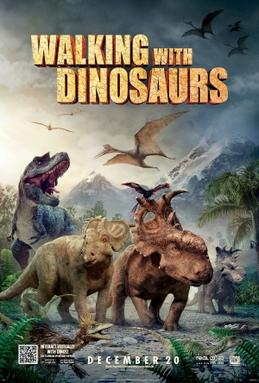
A Chat with the "Walking with Dinosaurs - 3D" Stars


This week's article focuses on two of the behind-the-scenes stars of Walking with Dinosaurs: 3D.
Disclaimer: We at Smileys News claim no ownership to Walking with Dinosaurs: 3D.

As many of you are aware of, the movie Walking with Dinosaurs: The 3D Movie just hit theaters on December 20, 2013 . . . Ok, so it didn't just hit theaters, but we here at Animal Adventures Inc. (AAI. for short) were affected by the film's release until now in a positive way: two of our residents, Gorgo the Gorgosaurus and Andrew the Triceratops recently finished their Hollywood debut. Andrew helped the filmmakers with advising them when it came time to film the dinosaurs in the wild and Gorgo actually was one of the stars of the film . . . sort of. After they got back to AAI., my trusty, junior photographer, Daniel P. Smithwater, and I decided to get an exclusive interview with these two awesome dinosaurs. “Walking with Dinosaurs is about this young Pachyrhinosaurus, named Pachi, who struggles to survive in a dangerous world,” Gorgo explains. “He faces many difficulties as he matures and eventually becomes leader of the herd. One of the difficulties he faces is deadly encounters with a dangerous species of dinosaur called Gorgosaurus – my species.” He went on to explain that Gorgosaurus is a smaller version of the larger and more famous Tyrannosaurus. It once made its home in the the northern part of the United States, Canada and what would later become Alaska. Gorgosaurus might have been smaller than T. rex, but it was way faster, reaching speeds of 30 mph in short bursts. “The main threat in the film,” Gorgo says, “is a ferocious Gorgosaurus named Gorgon. He's a killer dude, let me tell you! Even I'd give him a wide birth!” When asked what the WWD team did to make the film, Gorgo is quoted for saying, “Well, Andrew and I joined the WWD film crew as we went back in time to film the life of Pachi. Originally, the film was going to be a mere documentary, but a last minute decision was to do voice-overs with famous actors/actresses . . . [after] we finished the filming process, we went back to the studio and did the voice-overs for dinosaurs the film focuses on. The dinosaurs in the film are awesome! Many of the ones that appear – including my species and Pachyrhinosaurus – have never appeared in a major film before, just a few documentaries in recent years.” Then I asked him what role he played in the film. “One might say I 'stared' in the film,” Gorgo says, “so to speak. As with all documentaries, we filmed the animals doing the things they do to survive everyday with no acting, but there were shots the filmmakers wanted that would have been too dangerous to get using wild animals. Some of these scenes were close-ups of Gorgon. Let me tell you, Gorgon is a bad dude! And that's coming from a guy who weighs around three tons and has a mouth full of sharp teeth of his own! I think if I were in a face-off with Gorgon, I'd loose for sure . . . So what the filmmakers did for closeups of Gorgon was use me for a stand-in instead. Since I'm a little different color from Gorgon, they used special effects to alter my color to look like Gorgon's in post-production. Amazing process isn't it?” The last question I asked him was what creature in the movie was his favorite, besides the Gorgosaurus. He said, “Um . . . I think I like the Troodon and the Quetzalcoatlus. They were amazing to watch in action when we were filming. Now, for my least favorite creature in the film? Probably that pesky bird Alex the Alexornis! Every time I'd wake up from sleep with my mouth open, I'd find that crazy bird in my mouth looking for food scraps between my teeth! How annoying! All the other creatures though were great to watch.” Next, Daniel and I went to another film assistant: Andrew the Triceratops, to learn his role in the movie. “Unlike Gorgo,” Andrew says, “I didn't do any acting myself. Instead, I was more of a . . . I guess you could call me a dinosaur behavior specialist. I mean, who better to tell the filmmakers about dinosaurs than a dinosaur! The movie stars one of my lesser known relatives, the Pachyrhinosaurus. Instead of the horns the general public is familiar with on ceratopsians, or horned dinosaurs, Pachyrhinosaurus has a bony mass on its snout called a boss; it was perfect for ramming some sense into the hide of any carnivore, including Gorgosaurus.” Andrew went on to say that a key part in the film-making process was to insure that the cameras captured interesting moments. Andrew pointed out that since he's an expert at the behavior of ceratopsians such as himself, he could tell the cameramen where to point their cameras in order to get a good shot. Andrew's quoted for saying, “For instance, there once was a time we were filming the Pachyrhinosaurus herd and two large males – Bruiser and a rival male – were up on a hill nearby, just out of camera shot. Based on the noises and gestures they were making to each other, I knew they were getting ready to fight for dominance in the herd. 'The cameramen are going to miss this potentially great shot if I don't warn them,' I had thought. So I alerted the cameramen to start filming the two bulls and sure enough, we got a great fight scene for the movie!” When asked about his favorite creature in the film besides Pachyrhinosaurus, he was quoted for saying, “I really enjoyed the Edmontosaurus and ankylosaur, but I loved all the animals, including Alex, who I think Gorgo found very annoying. He's such a funny and fun-loving guy, you know. I also think it's great that animals that haven't been seen in cinema before get to make their Hollywood debut!” For those of you who didn't get to see Walking with Dinosaurs: The 3D Movie in theaters, it should be coming out on DVD this spring . . . and you can be sure I'll get myself a copy!

Written by: Mr. Smiley
Photographer: Daniel P. Smithwater
Edited by: Christian Ryan, Joy Hammond

*Disclaimer*
We here at Smiley's News don't claim any ownership to or wish to make a profit from anything related to Walking with Dinosaurs: The 3D Movie in anyway.

*Advertisement*

We here at Smiley’s News, I have been working night and day to get articles ready. I could really use some help! So we are looking for people interested in writing (especially kids and teens). If you are interested, PLEASE(!) send an email to animaladventures@aol.com and save me from working night and day! I’m exhausted!


Weekly Cartoons


Next Issue: Lizzy and the Riddler pt. 2

Saturday, February 15, 2014

Chores Are For Boars

Boars are guaranteed to revolutionize the cleaning industry and make even the most boring chores, like mopping and vacuuming, really fun!
Chores . . . they're necessary but so very boring! I mean, there are loads of other cool things that can be done both outdoors and indoors, but they often must be done after chores are completed. But those days might soon be over – the same scientist who brought us the “hair grazer” and the “Airway car” brings you the Boar! Dr. James Crowferd of Vassar College has successfully created this new invention, and what it is is essentially a “mop” that mops the floor by itself. For more details, my trusty, junior photographer, Daniel P. Smithwater and I went to Vassar College to get an exclusive interview from Dr. Crowferd. He is quoted for saying, “I know the pain many – especially kids and janitors – have to go to to get their houses, workplaces, schools and other places clean. Mopping is, in my opinion, one of the most exhausting chores. I mean, come on, you're dragging the mop forward and backward, foreward and backward, forward and backward, forward and backward, forward and backward . . . (and a lot more “forward and backwards”). . . and backward . . . [it's] an endless process and it gets tiring.” But that's when Dr. Crowferd thought of an amazing and revolutionary idea: why not create a mop that mops by itself! “I was going to create a vacuum cleaner – which in my opinion is just the dry version of a mop – but that's already been invented,” he says. “So I came up with the new device called the Boar. I thought of that name for my invention because of the way wild boars are known to feed.” He went on to explain that wild boars stick their snouts into and throughout the leaf litter on the forest floor of their woodland homes to find tasty foods such as roots, flowers, grubs and etc. “It's sort of like that when you're vacuuming,” he says. “What the Boar does is you place it on the floor you want to clean, and after turning it on, you have two choices: the first is to let it do the job. The other choice is to remote control it so that it can get to places the device might not think of getting.” Dr. Crowferd's Boar is controlled by a state-of-the-art thinking-computer inside of it that is able to determine which parts of the floor are dirty and which parts are clean. The scientist also informed me that it works sort of like a vacuum as well – sucking up the filth – since it isn't able to ring itself out like a mop can do. “Another cool feature,” says Dr. Crowferd, “is the Boar's amazing ability to clean carpets and rugs too. So it is, in a sense, a mocuum . . . get it? Mop plus vacuum equals mocuum? Ha, ha . . . yeah. Anyways, I expect that once we've produced enough Boars to sell, they'll literally fly off the shelves. Now that people won't be mopping, they can actually spend time doing other things . . . like being with family and going to church.” Then I asked Dr. Crowferd what exactly the Boar is made to clean up. His response was, “Well . . . it can clean up just about anything, really. Anything from dirt, mud, dust bunnies, lint and many other small objects. Of course, the Boar will never be able to clean up a dirty bedroom filled with things like clothes, toys, books and large objects, so people will still have to do that themselves. Hey! I know what I'm going to start working on tomorrow!” Then, Daniel recommended that I ask Dr. Crowferd if the Boar is environmentally-friendly. “Oh yes, actually,” he says. “The Boar runs on little to no power. We made it so that it can efficiently get the job done. In fact, it runs on the same power as does a large CD player or radio. In the future, I plan to design another edition to the Boar that instead of running on electricity, runs on vegetable oil. I was going to make one that runs off of cat litter but . . . that would have grossed people out too much.” The Boar will be in stores this coming fall, and when this time comes, we can relax and not have to worry about mopping ever again . . . though a large-numbered price tag could potentially cause your ease to vanish. “Yeah, the price of the Boar might be anywhere from a few thousand dollars to a couple hundred thousand dollars at first,” Dr. Crowferd says, “but perhaps once it's been on the market for a while, the price can come down, because everyone hard-working person in the world has the right to sit back, relax, and watch the Boar do all the work!”

Written by: Mr. Smiley
Photographer: Daniel P. Smithwater
Edited by: Christian Ryan, Joy Hammond

*Advertisement*

We here at Smiley’s News, I have been working night and day to get articles ready. I could really use some help! So we are looking for people interested in writing (especially kids and teens). If you are interested, PLEASE(!) send an email to animaladventures@aol.com and save me from working night and day! I’m exhausted!


Weekly Cartoons


Next Issue: A Chat with the "Walking with Dinosaurs - 3D" Stars

Thursday, February 6, 2014

Lizzy and the Riddler pt. 1

In this photo, Jack the Jackrabbit helps Lizzy solve a few riddles. Read more about it below!
I finally received my order for a special delivery. It was officially sealed and as heavy as ever. When I opened it there was a tiny piece of paper. I looked into the empty box perplexed. I spent $75 on a surprise for Mr. Smiley and now it was gone. Where is my package? I opened up the note and this is what it read:
 “To save your package, Lizard, You must solve my riddles. What is clean when it's black but dirty when it's white?”
I sit down at my desk, confused. I couldn't tell Mr. Smiley about this because then it would ruin the surprise, of course.
“Think Lizzy, think” I mutter looking around the office.
I watched as Ted put up a few notes on a clean chalkboard, then hurriedly erased the mistakes as best he could. Oh man, I groan. I just washed that board this morning! I quietly sit up in my seat.
“A Chalkboard!!!!” I exclaim excitedly, “It's clean when it's black and dirty when it's white because when you erase the chalk off it gets all musty!”
I hurry over to the chalkboard and peeled off another note. This is what it says:
“Very good Lizzy, here's the next one. What band does not preform, sing, or act?”
I smile happy to know that my package must be somewhere in the facility because of all these pointless riddles here in the office.
“Hm, what band does not preform...sing...or act?” I mumble as Jack the jackrabbit hops into the room.
“Hi Lizzy, what were you just saying?” he asked.
“Oh hi, Jack....this is a random question but are you good at riddles?” I asked, curious.
“Um yeah, a little,” he admitted. “What's the riddle?”
“What band does not preform, sing, or act?” I repeat.
Jack scratched the back of his head and then his eyes land on something on the table in front of me. He starts to laugh.
“That was a pretty good riddle, Lizzy, but not good enough!” he smiles. “A rubber band! HAHA!”
I look down and see a rubber band holding a rolled up index card right in front of me. I watched as Jack hurried away before I unrolled the note.
“Hey!” I remember, “getting help from others is cheating! Never mind, here's the next riddles: 'What has four eyes but cannot see? And what can run but never walk, has a mouth but never talks. Has a head but never weeps. Has a bed but does never sleeps?'”
I sit down and start to think. This is going to be a long day.

To be continued...

Written by: Lizzy the Lizard
Photographer: Daniel P. Smithwater
Edited by: Christian Ryan and Joy Hammond

*Advertisement*
We here at Smiley’s News, I have been working night and day to get articles ready. I could really use some help! So we are looking for people interested in writing (especially kids and teens). If you are interested, PLEASE(!) send an email to animaladventures@aol.com and save me from working night and day! I’m exhausted!


Weekly Cartoons


Next Issue: Chores Are For Boars