Friday, June 26, 2015

Rerun Article: Knock, knock! Who's There? Gator's Here!

This 12-foot alligator attempted to get into the house of Paul and Dianna Wellworth due to smelling barbecued chicken grilling in the backyard. Good thing they checked to see who was ringing the doorbell before opening the door!

Knock, Knock! Who's there? Al. Al who? Alligator's here, my dear! OK, maybe I'm not that good at knock, knock jokes, but this really does apply to what happened last Wednesday. Two Riverville locals named Mr. Paul and Mrs. Dianna Wellworth were out in their backyard enjoying the summer afternoon. To find out exactly what happened, my trusty, junior photographer, Daniel P. Smithwater and I went to interview them. “We just thought we'd enjoy the afternoon,” said Paul, “so I . . . popped up the grill and started grillin' barbequed chicken while Dianna read a good book.” It was a rather boring afternoon, so they decided to invite some of the neighbors to enjoy the afternoon grilling with them, so Diana went into the house to make some phone calls and the smell of barbecued chicken floated into the air, and this was bound to attract some attention, maybe even some uninvited dinner guests . . . Within the first 15 minutes, about four-fifths of the neighbors they'd invited arrived and Paul was putting the finishing touches on his BBQ chicken when suddenly, the doorbell rung once again. Dianna is quoted for saying, “So naturally, I went over to get the door since Paul was busy. I originally thought that these were the rest of our dinner guests. As a precaution I . . . [look] out the peephole to make sure I'm opening the door to the right people. But this time, I saw no one there and none of the guests we invited were that short! Next I decided to check out the window that was next to the front door to see who it was, and to my surprise . . . I thought I saw a big scaly lizard at my door!” Dianna went on to explain that she couldn't believe her own eyes. However, her eyes had indeed deceived her, as no lizard was present at her front door step. She went out the backdoor to see this “lizard”, when she found that it wasn't a lizard after all – instead, it was a 12-foot alligator with its body leaning up against the door! It's right front leg was inches from the doorbell! She went back to get her husband and he was pretty surprised as well. “I didn't believe Dianna when she told me a gator was at our door because . . . well, that's just not something alligators normally do!” Paul says. “When the word 'alligator' comes to mind, you think of it stalking in the water not the front door step of an urban neighborhood! And I certainly didn't believe a gator was at our door because, as far as I knew, alligators didn't live up here in New York!” Well, you can be pretty sure that the neighbors Paul and Dianna had invited soon heard about the alligator and they started to use their cameras to take a few photos (and all the while, the alligator was trying to get in the door). Paul decided that before the alligator got ferocious, he'd better call the authorities. So he called the police, and the police got Wildlife Removal Inc. to come have the alligator taken back to where it lived. “I had never heard of such an event,” says Pete Wilkins, one of the wildlife wranglers involved in the alligator's capture. “But we've located where the gator came from, so he'll be back home in no time.” It turned out that the gator wasn't wild, but actually from the local New York Africa Zoo (his keeper apparently forgot to lock the cage). Upon his return, the alligator is now happily swimming in the Gator Pond exhibit with his pond-mates and Paul, Dianna and their invited neighbors were finally were able to have their chicken dinner in peace. But why on earth would the alligator come to the Wellworth's in the first place? We put that question to zookeeper Manny Minlens, and she's quoted for saying, "Alligators have a superb sense of smell and the smell of barbecuing chicken probably lured our gator to their house and tried in vain to get into the house." All, I as the reporter can say is that, after reporting on a story like this, it's a fair bet that I'll always remember to see who is knocking before opening the front door!


Written by: Mr. Smiley
Photographer: Daniel P. Smithwater
Edited by: Christian Ryan, Joy Hammond

*Advertisement*

We here at Smiley’s News, I have been working night and day to get articles ready. I could really use some help! So we are looking for people interested in writing (especially kids and teens). If you are interested, PLEASE(!) send an email to animaladventures@aol.com and save me from working night and day! I’m exhausted!


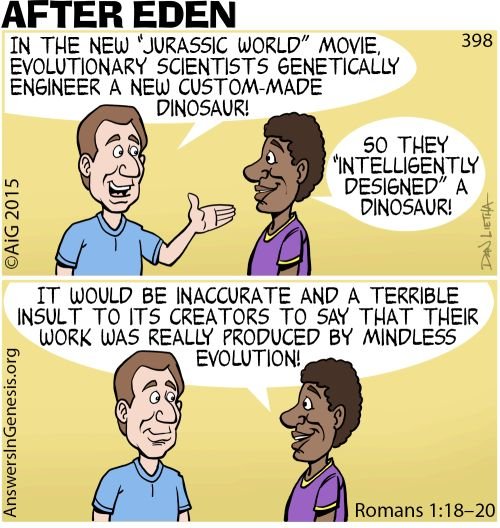
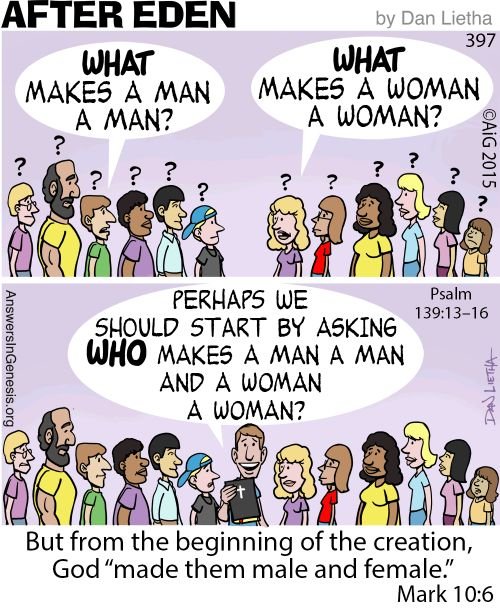
Weekly Cartoons


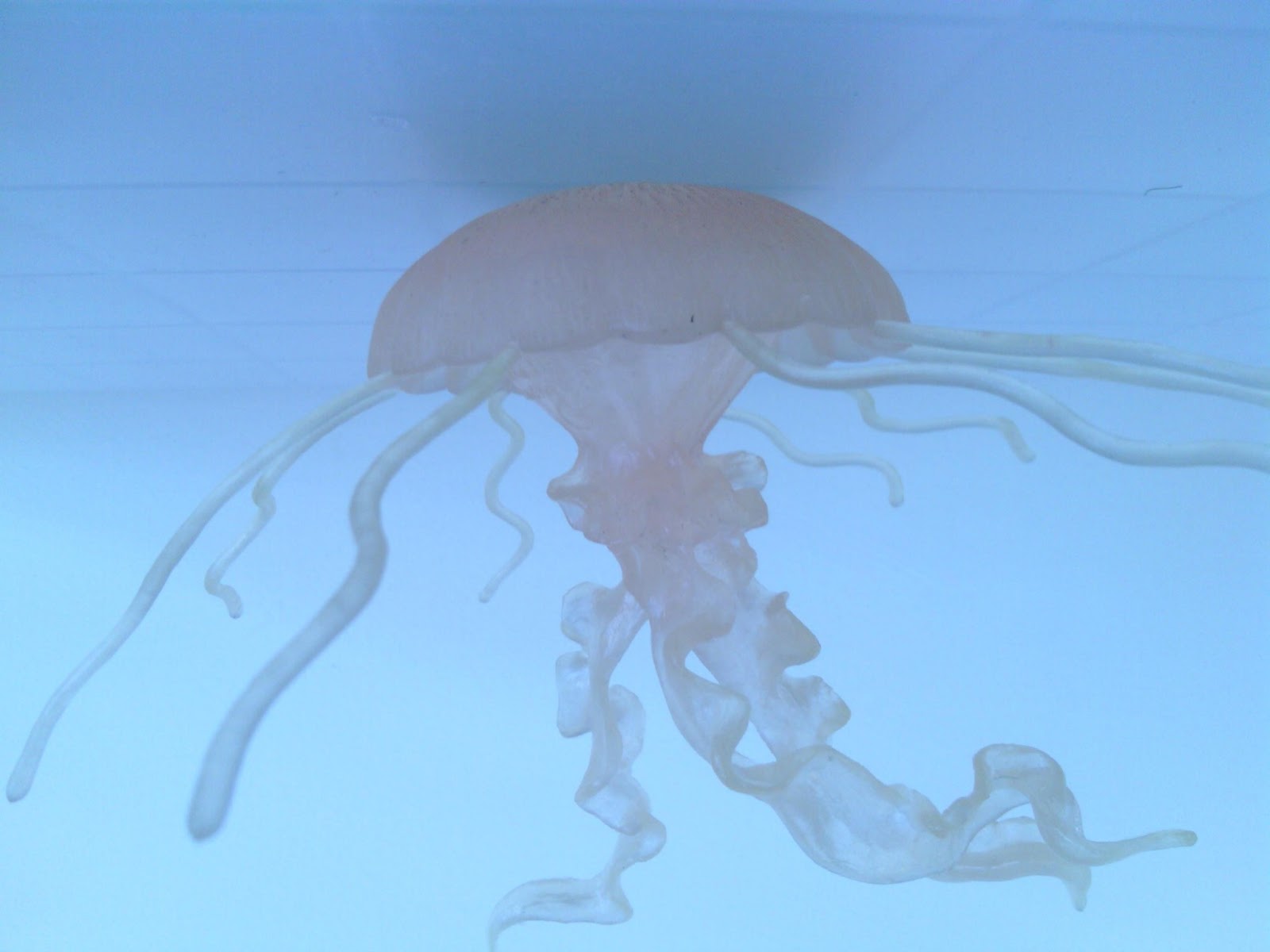
Next Issue: Rerun Article: Age-Old Jellyfish Visits Animal Adventures Studios

Friday, June 19, 2015

Rerun Article: Dino Park: Invader

OK, I'm not normally a huge video gamer. Seriously. It's not that I don't like playing video games, but I just don't have the time for it with all the work I have to do here at Smiley's News. However, when I heard that the game company Unimaginable © was going to be releasing a game featuring dinosaurs, I just had to get a story published about it! As you all might already know, Unimaginable © is responsible for creating games such as Indiana James and Noah's Lost Ark, Galactic Wars Episode IV, To the Future and Back and Lord of the Pinto Beans; their latest game is known as Dino Park: Invader! My trusty, junior photographer, Danial P. Smithwater and I went to the Unimaginable © company building to interview the head game developer, Tyson Cortes.

The game's description is as follows:
In Dino Park: Invader!, you play as Annie, a woman who's plane wrecks on a mysterious island off the coast of Costa Rica in the Pacific Ocean and finds that she is the only survivor. Unfortunately, she soon comes to realize that the island she arrived on is not just any island – she's landed on Isla Cortez, the breeding ground for a once top-secret company known as Biogen, or Biological and Genetic Technologies Inc. and that the island is inhabited by living, breathing dinosaurs! Using her strength, wits and tools she finds on the island, Annie must escape the dino-filled island alive by reaching the helicopter landing pad. Can she make it in time?”
Tyson is quoted for saying, “After finishing Lord of the Pinto Beans, we decided to do a dinosaur-themed video game since pretty much everyone loves dinosaurs.” Tyson got the idea to start working on the game when he finished watching his five-year old son playing with his dinosaur collection and a toy person. He had the dinosaurs actively pursuing the person.

“The game is a first-person adventure staring a woman named Annie,” says Tyson. “The game involves a lot of fleeing, fighting off dinosaurs using weapons she finds lying around and solving logic puzzles. All the environments are three-dimensional and consist of quite a few different habitats.” Tyson went on to explain that the game also features Annie learning about the rich history of Biogen – the initial creation, rise and eventual fall of the company. “The player will also learn a lot about Annie's personality as the game unfolds, she's a very creative, energetic, optimistically-minded young woman.”

Dino Park: Invader! doesn't only consist of Annie of course, it's filled with a rich environment and loads of amazing creatures in each level. The game is planned to have 16 levels that Annie will have to get through in order to make it off the island:
  1. The Beach
  2. The Estuary
  3. The Mangrove Swamp
  4. The Open Woodland
  5. The Sauropod Valley
  6. The Jungle
  7. The Plains
  8. The Jungle #2
  9. The Worker Village
  10. The Laboratories
  11. The Raptor Nest
  12. The Upland Forest
  13. The Mountain Forest
  14. The High Cliffs
  15. The Communication Center
  16. The Race to the Helipad
Each of the levels features little challenges for Annie to figure out and she'll have to battle dinosaurs in every level as well,” explains Tyson. “Well, I take that back. The . . . [level] that takes place at the Beach is a tutorial level, where the player can learn how to do certain things.”

Of course, you can't have a dinosaur game without the dinosaurs! There's a whole host of dinosaurs making their appearance in this game that Annie is going to encounter. “We tried our best to fill the game with a lot of well known dinosaurs,” says Tyson, “but also some dinosaurs that many people might not know about. One of my favorite dinosaurs in the game is Sinornithosaurus.” Tyson tells me that Sinornithosaurus is an arboreal (tree-living) raptor related to Velociraptor that leaps out of trees to attack Annie. Annie must locate as many weapons (tranquilizer guns, tasers and cattle prods) to defend herself from these and other dinosaurs. Tyson also said, “Of course, we had to put in Tyrannosaurus rex. In my opinion, you can't have a dinosaur game without T. rex. Annie meets loads of T. rex when she's on her island adventure. We also felt that we had to include Velociraptor. In the game, they try to make surviving a hard thing for Annie to do. They're very intelligent and hunt in packs. If Annie doesn't watch her back, she's a goner! Oh! I almost forgot to mention that there are three tribes of raptors across the island: Tribe A, Tribe B and Tribe C; as if one type of raptor wasn't enough!” Tyson was able to give me a list of the dinosaurs planned to be in the game. The list consists of:
  • Tyrannosaurus rex
  • Velociraptor
  • Triceratops
  • Brachiosaurus
  • Pachyrhinosaurus
  • Acrocanthosaurus
  • Albertosaurus
  • Stegosaurus
  • Compsognathus
  • Sinornithosaurus
  • Dilophosaurus
  • Diplodocus
  • Allosaurus
  • Styracosaurus
  • Camarasaurus
  • Ceratosaurus
  • Cryolophosaurus
  • Baryonyx
  • Spinosaurus
  • Oviraptor
  • Pteranodon
  • Pachycephalosaurus
  • Dracorex
  • Stygymoloch
  • Torosaurus
  • Kentrosaurus
  • Eoraptor

Unimaginable © plans to release this game on May 21, 2014 and are very excited about doing so. They feel as if they have the perfect dinosaur game. “The development team has put a lot of work into making this game,” Tyson says, “and I'm sure that once we're done, it will be all worthwhile!”


Written by: Mr. Smiley
Photographer: Daniel P. Smithwater
Edited by: Christian Ryan, Joy Hammond

*Advertisement*
We here at Smiley’s News, I have been working night and day to get articles ready. I could really use some help! So we are looking for people interested in writing (especially kids and teens). If you are interested, PLEASE(!) send an email to animaladventures@aol.com and save me from working night and day! I’m exhausted!


Weekly Cartoons

Next Issue: Rerun Article: Knock, knock! Who's There? Gator's Here!

Friday, June 12, 2015

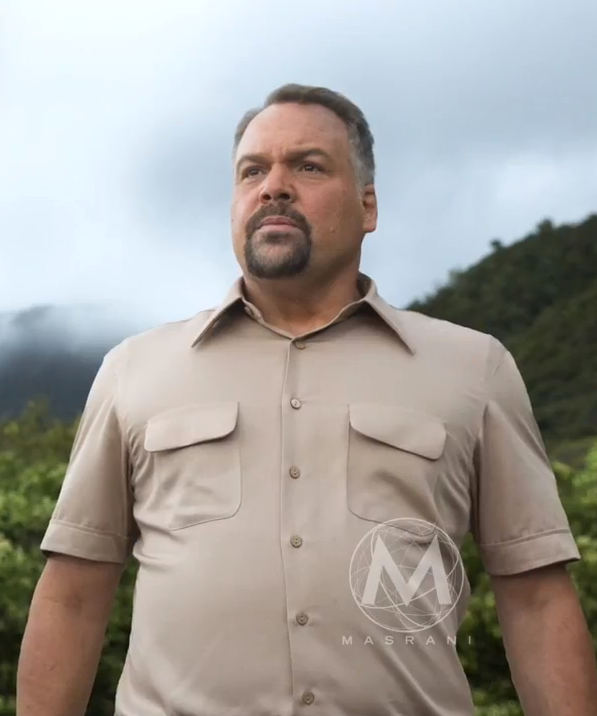
Behind the Minds of Jurassic World: pt. 3 Vic Hoskins

Earlier this week, I had the chance to speak with Vic Hoskins, head of InGen's Secuirty Division to see just how much work goes into keeping Jurassic World the safest theme park in the world.
Disclaimer: We at Smiley's News claim no ownership to anything regarding Jurassic Park, Masrani Global Corporation, InGen or Jurassic World.
Finally, the day we've all been waiting for is here! The most advanced amusement park in the entire world – Jurassic World – has finally opened to the public! I'm so excited! In fact, I've already bought tickets and my trusty, junior photographer, Daniel P. Smithwater, and I are waiting in line about to board the ferry to Isla Nublar for the grand opening as I publish this. But let me go back to what happened a few days prior.

Two weeks ago, I had an interview with Mr. Simon Masrani, the CEO of Masrani Global Corporation. Last week, I had an interview with Dr. Henry Wu, head geneticist of Jurassic World, and the public operations manager, Claire Dearing. Earlier this week, I had the opportunity to interview one more mind behind Jurassic World to finish up this series: Vic Hoskins, head of InGen Security.

As you know, attempts to create “Jurassic Park” haven't gone too well in the past – several deaths occurred in the '93 incident, and the incident of '97 was also bad because not only did countless deaths occur on the island of Sorna, but also on the mainland when the T. rex escaped into San Diego. So naturally, it only makes sense that Mr. Masrani ensure a safe and treasured experience for guests to his park. That's why he hired Vic Hoskins. Below is my interview with him:

Me: As usual, it's always a privilege to talk to the people working with Jurassic World.
Hoskins: No problem. It's important for the public to know about what's going on at the park.

Me: So what exactly is InGen Security?
Hoskins: Well, InGen Security is best described as a division of the InGen company. Once a small, private service, we're now a vibrant multi-national security organization of the highest caliber. Even though many of my officers work on Nublar, others work in other parts of the world. See, we focus on a lot more than just the park. InGen Security also puts attention on anything from on innovations in drone technology and the introduction of cold-signature mapping in satellite surveillance, but we've also been at the forefront of peacekeeping and contingency services in every corner of the world for the past decade.

Me: Wow, that's incredible. You have a lot on your shoulders.

Hoskins: True, but after doing this for so long, I just consider it just another part of my job.

Me: Could you explain a little more about your drone operation?

Hoskins: Sure. Since 2007, InGen security has been developing new drone technology with Masrani Global subsidary Aerospace Dynamix and Mascom Network. We're trying to find ways to use robots and drones to do the fighting for us, so to speak. The ground soldier is becoming less of a major player out in the battlefield. These days, armies are investing more in drones and robotics as we see a shift in the methodologies of warfare.

Me: I see, so what are your priorities as head of InGen Security?

Hoskins: We like to say that our duties are to be direct, alert and safe, especially concerning places like Jurassic World. At the park, safety is our biggest priority. In fact, we've developed over 150 protocols and safeguards for every dinosaur in the park.

Me: And people who visit the park have a role to play too, right?
Hoskins: Exactly. Safety is a two-way street. Park tourists need to do their part, even if it's doing something as simple as refraining from tapping on the glass, crossing barriers, throwing anything into the exhibits and what not. That's what makes Jurassic World not only the most advanced theme park in the world, but also the world's safest. And of course, we've also installed loads of 10,000-volt electrified fences all around the park. Keeps those hungry dinosaurs in their proper place. We don't have the capacity to take things for granted at the park.

Hoskins: And not only must we protect people and dinosaurs in the park, but also on other islands, specifically Isla Sorna. You know it's been turned into a nature preserve, right?

Me: Yes.

Hoskins: Well, ever since the world learned about the existence of genetically-engineered dinosaurs, poachers have been known to risk their own lives working in the service of ruthless collectors. It has been reported that some individuals who, having been responsible for mishandling captured specimens, have suffered from disturbing hospitalization cases on the Costa Rica mainland.

Me: How did you become associated with Masrani Global and Jurassic World?
Hoskins: Well that's actually rather interesting. In 2001, I was involved with a clean-up operation involving those three Pteranodon that escaped the Isla Sorna Aviary – which has since been repaired by the way. Those critters made their way up to Canada before we captured and returned them. The professionalism of my team caught the attention of Simon Masrani himself, who personally hired me to re-develop InGen's Security Division. My team and I were also responsible for overseeing the protection of workers on Isla Nublar during Jurassic World's construction.

Me: Have you had any instances at Jurassic World?

Hoskins: Actually, we haven't had any major instances worth noting.

Me: I see. Alright, I have just one more question for you.
Hoskins: Shoot.

Me: What is your favorite dinosaur at the park?

Hoskins: I like our herd of Microceratus. It's a smallest dinosaur in the park; a close relative of the larger Triceratops. I like them because they're quite arguably the easiest dinosaur we have to care for, and they're not likely to hurt anybody. After all, they only weigh 14 pounds!

Me: That's it? Wow! Well thank you so much for giving us your time.

Hoskins: I appreciate it.

Me: So, as you know, by the time I publish this interview, the park is going to officially open. Do you have anything special to say to our readers in closing?

Hoskins: Sure. Managing Jurassic World is no easy job. It requires a lot of thought and teamwork to run properly. Now, thanks to the collective minds involved with the project over the past decade, we can now present to you Hammond's dream of bringing living, breathing dinosaurs to the public. Enjoy the park as it was meant to be enjoyed!

Well, that about wraps up this series of “The Minds Behind Jurassic World”. Now, I'm going to have to sign off now because the ferry is boarding at this moment, and I certainly don't want to loose my place in line. I've got dinosaurs to see! Catch you all later!

Written by: Mr. Smiley
Photographer: Daniel P. Smithwater
Edited by: Christian Ryan

Weekly Cartoons

Next Issue: Rerun Article: Dino Park: Invader

Friday, June 5, 2015

The Minds Behind Jurassic World: pt. 2 Dr. Henry Wu & Claire Dearing

This week, my trusty, junior photographer and I were able to chitchat with Dr. Henry Wu and Martha Dearing, two of the people behind Jurassic World.
Disclaimer: We at Smiley's News claim no ownership to anything regarding Jurassic Park, Masrani Global Corporation, InGen or Jurassic World.

Last week, Simon Masrani was kind enough to spare some time to have an exclusive interview with me and give us some insight on the construction of the new theme park Jurassic World. This week, my trusty, junior photographer, Daniel P. Smithwater, and I had the opportunity to talk with two more brilliant minds behind the creation of Jurassic World: Dr. Henry Wu, a good friend of mine and the chief geneticist for both the new park and the original Jurassic Park, and Claire Dearing, the new park's operations manager.

Our first interview was with Dr. Wu, which is visible below:

Me: Daniel and I can't tell you how excited we are to be interviewing a great scientist sucha s yourself.

Dr. Wu: I enjoy these interviews. They excite me, Mr. Smiley.

Me: Of course, I know the answer to this question, but many of our readers might not, so what is a geneticist?

Dr. Wu: Basically, a geneticist is a scientist who studies genes – their inner workers and how they operate. After all, genes are the building blocks of life, so by learning as much as we can about them, we're learning a lot about ourselves.

Me: What role did you play in the original Jurassic Park?

Dr. Wu: As with Jurassic World, I was the chief geneticist. I am not responsible for inventing the technique of cloning dinosaurs – Hammond got the idea; I am also not responsible for laying the deepest foundation for the technique – Dr. Laura Sorkin, the park's former chief geneticist, hold that title. But what I did was give the idea life. I am responsible for bringing Hammond's idea of cloning dinosaurs from mosquito gut contents to reality by figuring out how to use the DNA of living animals – frogs, as was the case in the first park – to complete the otherwise fragmented genetic codes of extinct dinosaurs. Without a complete genetic code, the cloning of any animal is impossible.

Me: That's true. Now unlike what's in Michael Crichton novel, based on the events of the park, you escaped the island long before the dinosaurs got out and the place went haywire.

Dr. Wu: That would be correct.

Me: So were you involved with InGen any, if at all after the Incident of '93? I noticed you had nothing to do with the events of 1997 or 2001 on Isla Sorna.

Dr. Wu: That's right. I've always worked for InGen since they hired me. However, the time between 1993 and 2002 was when I made several revolutionary discoveries in my laboratory. But I'll get to those in a minute. Back to your original question, did you know that InGen conducted a clean-up operation on Isla Nublar long before the new park was built?

Me: Really? I actually didn't know that. When did that happen?

Dr. Wu: It happened in 1994. InGen's board of directors decided that we needed to analyze the damage on Nublar, so they recruited me and several others – including soldiers to keep us safe from the island's inhabitants and help us bring the island under control. During this mission, my main job was to catalog the animals on Isla Nublar and determine why they were breeding when we genetically-engineered them specifically not to breed.

Me: And what did you find out?

Dr. Wu: The reason they were breeding was because of the frog DNA we used in their creation. See, some species of West African frogs have the ability to change sex in a single-sexed environment. As the dinosaurs were originally all female, the frog DNA allowed many of them to change into males and breeding began to occur.

Me: That's pretty weird.

Dr. Wu: Yes, it's weird to us, but switching of the genders is not uncommon in nature. Clown fish, for example, are also capable of changing sex. It was the fact that we could combine the DNA of two different creatures to create a new creature really interested me.

Me: Wow. I actually never knew that. So, what are you doing now as chief geneticist at Jurassic World?

Dr. Wu: Actually, I recently finished a special living, biological attraction that I was assigned to create by Simon Masrani himself. It's a very amazing creature. When you have your interview with Claire Dearing later, I'm sure she'll want to elaborate with you more. After all, the project is now primarily in her department.

Me: I can't wait to talk with her then. What's next for you since you've finished your “special assignment”?

Dr. Wu: I'm going to explore the possibilities of genetic engineering. I really want to see just how far we can go with using DNA from two different creatures in one creature. Also, I want to increase our knowledge of how genetic material works. That's why I've recently started studying what's called “junk DNA”

Me: Junk DNA?

Dr. Wu: Yes. It was called junk DNA because scientists once thought it was just useless DNA that was left over from our evolutionary ancestors. But now, many scientists, including myself, have discovered that a lot of this “junk” DNA actually provides much use for whatever organism the DNA is from at least in some part of its life. It's actually very useful DNA. We suspect that learning more about “junk” DNA will help us learn more about certain diseases and how we can prevent them. In retrospect, I'd like to do everything I can to move InGen further into the bright future.

Me: You and your team sound incredible. How do you figure out all this stuff?

Dr. Wu: Wouldn't our competitors like to know.

(Dr. Wu and I laugh)

Me: That sounds awesome. I've got two more questions for you. What's your favorite dinosaur?

Dr. Wu: Wow, that's a tough one. I'd have to say Velociraptor is one of my favorites because many of their fossils have been excavated in the country I'm from: China.

Me: Nice. Before we go, do you have any hobbies and/or secret talents you'd like to share with us?

Dr. Wu: I actually have a real knack for playing Chinese checkers. I was the 3rd best in my family, after my uncle and my father. Now HE was the Chinese checkers champion.

Me: Well, again, thanks for taking the time to meet with us today, Dr. Wu.

Dr. Wu: No problem. This was fun.


Below is our interview with Claire Dearing.

Claire Dearing is Jurassic World's public assets manager.
Me: It's really nice to meet you, Ms. Dearing.

Claire: Thanks, but you can call me Claire.

Me: OK, then. So Claire, what do you do at Jurassic World?

Claire: I'm the park operations manager. It's my job to monitor the entire park and ensure everything is operating OK. I also have to make many of the important decisions that comes with running this park.

Me: I see. What makes Jurassic World different from Jurassic Park?

Claire: Well, first of all, JW certainly has a different feel than the first park. The first park was more like a safari adventure, in which tourists would have “explored” the island to “find” different species of dinosaurs. While the park would have featured several rides, like the jeep tour, and the Bone Shaker roller coaster and the river cruise, the dinosaurs were the primary attractions. The atmosphere of a biological preserve outweighed the feeling that you were also in a theme park. With Jurassic World, we wanted something a little different. In this park, while we will have tourists will feel like their on an adventure back in time, the park also includes many modern conveniences – the Hilton Isla Nublar Resort, Starbucks, the Aquatic Park, a state-of-the-art Innovation Center, Ben and Jerry's and even a Dairy Queen – to give visitors the impression they're in a theme park as well.

Me: So it's a biological reserve adventure park?

Claire, laughing: Yes, that's exactly it.

Me: What would you say is one of your top priorities at the park?

Claire: Making sure everyone has a good time. Visitors coming to the park need to be fed, entertained and protected. Thankfully, Vic Hoskins, head of InGen's security division takes care of making sure the park is safe. We also want to provide guests with an enjoyable and memorable experience. Creating that experience is largely my job.

Me: Now, Dr. Wu and Mr. Masrani spoke of a new upcoming attraction at the park? Care to tell us about it?

Claire: Ah, yes. The new attraction. We're very excited about it. As I'm sure you've heard from Dr. Wu, we have learned more in the past decade from genetics, than a century of digging up bones. A whole new frontier has opened up. The newest attraction to the park is an amazing new species of dinosaur.

Me: A new species of dinosaur?

Claire: Yes, it's a species that has never walked the earth before. It's our first, genetically-modified hybridized species.

Me: So...you just went and made a new dinosaur?

Claire: Ha, ha. You sound just like Owen.

Me: Perhaps. What species of dinosaurs were used to create this hybrid? Does the hybrid have a name?

Claire: Yes. We're calling her Indominus rex, meaning “untameable king” in Latin. We used several different species, including four rather large carnivorous dinosaurs called Carnotaurus, Rugops, Majungasaurus and one of the largest carnivores ever to walk the earth: Giganotosaurus. Essentially, I. rex is meant to provide the public with just what they'd like to see – something bigger than T. rex, meaner and with more teeth.

Me: This hybrid sounds kind of cool! How did the other scientists respond to this initially?

Claire (is quoted for saying): Scientists are often challenged by the risks involved in executing grand concepts. Many at InGen doubted the likelihood of a successful hybrid, but here we are just one month away and she's more than we imagined. We will closely monitor visitor response and gauge the consumer's appetite for future experiences, taking Jurassic World into a new era.

Me: It seems like you have your work cut out for you. Do you have future plans already in place for the park, or are you going to wait and see how Indominus rex impresses the public first?

Claire: We have to plan far ahead for these types of things. As we seek to recreate the past, we can't forget to innovate. We have several new rides in the conceptual phase with Axis Boulder (Masrani Global Corporation's construction division). Out most evolved, the “Treetop Gazers”, has an ETA sometime in 2018.

Me: I'm really stoked about the new park. I'm almost done interviewing you. I have two more questions. What's your favorite dinosaur?

Claire: Definitely Indominus rex. I also have a thing for Apatosaurus, a species of long-necked sauropod native to Jurassic North America.

Me: Awesome. Well, thanks so much for meeting with us today.

Claire: This has been a blast. Who's your next interviewee.

Me: Well, next week as you know, Jurassic World will open to the public, so I'll be talking with Vic Hoskins, head of InGen security.

Claire: You'll have fun with him. Trust me.

Me: I'm sure we will.

Written by: Mr. Smiley
Photographer: Daniel P. Smithwater
Edited by: Christian Ryan


Weekly Cartoons


Next Issue: The Minds Behind Jurassic World – pt. 3: Vic Hoskins & Owen Grady

Friday, May 29, 2015

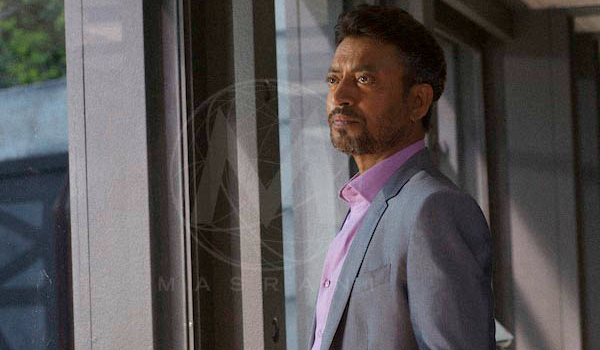
The Minds Behind Jurassic World: pt. 1 Simon Masrani

Simon Masrani, head of Masrani Global Corporations, spearheaded the movement to create Isla Nublar's Jurassic World.
Disclaimer: We at Smiley's News claim no ownership to anything regarding Jurassic Park or Jurassic World.

Jurassic Park was, according to its founder, the late John Parker Hammond, to be “so astounding that it would capture the imagination of the entire planet”. Like Hammond himself, the park he planned to create was outsized, bold and impractical – the first theme park in the world to possess living, breathing dinosaurs for the world to see. Featuring 15 species of dinosaurs and other extinct reptiles during their Phase A, the park's construction began on Isla Nublar and was nearly complete in 1993. The park was set to open in 1994. But chaos broke loose on June 11, 1993 when the park's computer system (which controlled almost everything in the park) failed and the dinosaurs escaped. Many people lost their lives. The island was left for abandonment. It looked like John Hammond's dream would never see the light of day...until now!

When InGen (Hammond's company) seemed to have insurmountable financial issues starting in 1993 (after the Isla Nublar Incident), you would think that Hammond's park would never come to fruition. It never would have if it weren't for the help of Masrani Global Corporation. MGC bought InGen and successfully restored it to the level of satisfaction once sought by the former founder. One duty the company's CEO, Simon Masrani, knew had to be fulfilled was the completion of Hammond's dream which comes alive as we speak!

For more details, Simon Masrani was kind enough to spare some time with my trusty, junior photographer, Daniel P. Smithwater, and I at Smiley's Newspaper headquarters. I felt honored to be speaking to such an important man. Below is my interview with Mr. Masrani.

Me: So how was Masrani Global Corporation founded and how did you become its CEO?

Masrani: Well, it was my father, Sanjay Masrani, who founded Masrani Global Corporation on February 16, 1973. The company first started out with only one division called Mascom, an ambitious telecommunications network located in the heart of India, my home country. For ten years, by father oversaw Mascom perfect its technology until it became a very popular company that had positive effects around the world. Then my father passed the business down to me.

Me: That's cool. So what does MGC do now? Obviously you've gone far beyond Mascom.

Masrani, laughing: That's an understatement, Mr. Smiley. We've expanded the company to include many different divisions around the entire world. One of our largest divisions was called Masrani Oil. Masrani Oil was responsible for putting MGC on world business radar.

Me: It “was called Masrani Oil”?

Masrani: Yes, that was the name the company started out with, because that is what that division centralized on. But Masrani Global Corporation is all about new research and innovation. That division is now called “Masrani Energy”, as of earlier this year, and is shifting its focus from oil – a fossil fuel destined to run out with time – and toward the use of cleaner energy resources, like wind, solar and hydroelectric energy.

Masrani: Now I regress. Today, the Masrani Global Corporation has holdings in both the commercial and industrial sectors, ranging from energy and telecom – as I just explained – mining, construction, engineering, real estate, technology, bioengineering and health care, along with many others. Masrani will continue to expand with time.

Me: That's really awesome. Now what is your company's connection with InGen?

Masrani: For that we have to go back in time a bit. It started in 1998. InGen was failing financially thanks to the Isla Nublar Incident and the San Diego Incident of 1997 when the T. rex escaped confinement and terrorized the city.

Me: I see.

Masrani: I was already associated with InGen to an extent, because my father was close friends with Hammond, and it was 1998 when we officially bought the company, saving it from facing Chapter 11.

Me: Don't you mean extinct?

Masrani:Yes, exactly.

Me: When did you decide to pick up the baton Hammond left behind?

Masrani: Between the years 2002 and 2004, it occurred to us that we should attempt to bring Hammond's dream to life. It was a great fantasy of his and the world deserves this wonderful attraction. So we built the park and after years of planning and construction, we'll be ready to open the park on June 12 of this year.

Me: I'm really excited.

Masrani: I'm glad. I think you'll like it.

Me: So what was it like to oversee the reconstruction of Hammond's theme park?

Masrani: For me, my Senior Assets Manager, Claire Dearing, and my head geneticist Dr. Henry Wu, it was an incredible experience.

Me: Did you ever feel discouraged?

Masrani (is quoted for saying*): Every leader in the history of the planet has had moments of discouragement. When that feeling came across me, I simply kept telling myself that 'the greatest thing we must learn in life is that nothing is impossible. We fear the unknown on a daily basis, but it is that unknown which drives us. Our species, whatever entities we may be, have been given a gift of asking why? We cannot forget that.'

Me: Speaking of Jurassic World, what dinosaur is your favorite?

Masrani: My favorite dinosaur at the park is also one of our newest. Claire Dearing can give you more information than I am permitted to at this time.

Me: That's fine. Alright, I have just a few more questions before we're done. What do you do in your past time and do you have any hidden talents you'd like to share with us?

Masrani: I'm actually fond of cricket. And hidden talents? Well, I like to play the sitar.”

Me: What's a sitar?

Masrani: Simply put, a sitar is a plucked stringed instrument used mainly in Indian classical music. It looks kind of like a guitar, if you were to compare it with American instruments.

Me: Well, I've definitely have had fun with this interview, Mr. Masrani. Thanks so much for taking the time.

Masrani: It was my pleasure.

Me: Now, to all my faithful readers, remember that Jurassic World opens on June 12 (with an accompanying movie releasing in theaters the same day). In the meantime, get ready for our following interview next week, when we'll sit and chat with Jurassic World's Senior Assets Manager, Claire Dearing and the park's head geneticist, Dr. Henry Wu!

Written by: Mr. Smiley
Photographer: Daniel P. Smithwater
Edited by: Christian Ryan

Next Issue: The Minds Behind Jurassic World: pt. 2 Dr. Henry Wu & Claire Dearing

* Had to fit that catchphrase of mine in there somewhere!

Friday, May 1, 2015

Rerun Article: Elizabeth Strikes Again!

Elizabeth, Steve and John after their failed attempt to take over the world. As you can see, Elizabeth painted her hat white in a vain attempt to look "good" so people would buy the candy

Elizabeth P. Bat Mitten can’t seem to get off the headlines, can she? When I, Mr. Smiley heard she could be getting in more trouble, I rushed over to the scene with my photographer, Daniel P. Smithwater. The scene is, like always, Riverville, New York. Nice little place, plenty of parking space, and lots of hot cocoa! Wait, why am I talking about cocoa? Anyway, back to the story. Elizabeth decided she would once again try and take control of the world. This time though, she wanted more help than that of her trusty robotic hat named Max (whom she painted white). Her other assistants would be her husband, Steve Bat mitten and her son named John Bat mitten. They each started making cotton candy and unfortunately, it was a huge success. You see, the cotton candy was 2.1% (candy) cotton and 98.9% sugar. Since it was pretty much all sugar, it made most of the people who ate way to active and after a day or two they fainted. A few people who didn’t faint were Christy Poppyseed, Debby Boxford, Becky McGregor, Steve Stephen, and their parents. When they learned everyone else fainted (except of course your trusty reporter and photographer, Daniel and I), they devised a plan to get the police back in action. By working together producing skunk spray to put in front of their noses, they were able to revive the police and the police were able to capture the Bat mittens (who were so undulged in cotton candy that thy couldn't escape). It is recommended never to try Elizabeth’s food . . . again!

Story written by: Mr. Smiley
Photographs taken by: Daniel P. Smithwater
Edited by: Christian Ryan M.

Weekly Cartoon


Next Issue: Unknown

Friday, April 24, 2015

Rerun Article: Sarassic Park Stomps Into Theaters!

The theatrical poster for "Sarassic Park". It will be showing in theaters starting this Friday (May 17, 2013)!

People shuddered by the thousands when dinosaurs made their way onto the movie screen in Jurassic Park when it was released in 1993. That was 20 years ago. You could practically call Jurassic Park the first movie ever to have real dinosaurs on screen, rather than those fake-looking stop-motion ones that killed everything that moved. Ever since Jurassic Park came out, people have wanted their dinosaur movies to be more realistic than ever before. Now a new dinosaur movie is coming into theaters this Friday (May 17, 2013). Enter: Sarassic Park! It may sound a little bit like “Sarcastic Park”, but it's nothing of the sort. When I heard about this movie, my trusty, junior photographer, Daniel P. Smithwater and I went to talk with the people who made this film, such as the director, Stephen Iceberg (is there any coincidence it rhymes with the famous movie-director Steven Spielberg?). When I asked him what the basic plot of this film was and if it was different than Jurassic Park, he is quoted for saying, “Contrary to what everyone's thinking about this movie, despite it's title, the plot has nothing to do with Jurassic Park. It's a totally new movie featuring new species of dinosaurs that tend to look remarkably like everyone's favorite actor, Sarah Bus Stop Guy! So the plot is about this girl named Sarah Bus-Stop-Guy who creates this theme park called Sarassic Park. Now at this park, they have cloned some species of dinosaurs that have never been seen before, such as the dangerous and very intelligent Sarahlosiraptor, the venom-spitting Sarahlophosaurus, the ever-popular Trisarahtops, and of course the mighty Tysarahsaurus rex, just to name a few.” For more details on the plot, I asked the one of the film's producers, Katelene Cassidy (which seems to rhyme with Jurassic Park's producer's name, Kathelene Kennedy). “This film is about paleontologists Dr. Alphonso Grant (played by Sir Lamb Deal, which rhymes with Jurassic Park star, Sam Neil) and Dr. Lizzy Sattenberger (played by Dora Churn, which appears to rhyme with Jurassic Park star, Laura Dern), a math teacher named Dylan Malcolm (played by Jeff Moldblum, which seems very familiar to Jurassic Park star Jeff Goldblum) and of course, the park's creator, Sarah Bus-Stop-Guy (the movie-makers couldn't get Sarah herself to play the part, so they enlisted Sarah Sillyheart to play the part) as they try to create a theme park full of dinosaurs. They don't do this on an island like what happens in Jurassic Park, but instead they build it in Florida. But things go terribly wrong and the dinosaurs escape (sound familiar?). Now the dinosaurs are running amok in Florida.” I tried to ask Katelene for more details, but she said that we'd have to wait for the movie to come out to find out more. If you ask me though, despite what the movie-makers say, this sounds a great deal like Jurassic Park. Next, my photographer and I went to interview Sarah Bus Stop Guy herself (as you'll recall, “Bus Stop Guy” is a three-part last name) to see what her opinion on the movie was. When asked if she was excited about the movie, she said, “NO! I don't like that movie!” When asked why she didn't like it, she responded, “Because it's involving me in a bad way . . . it's making me popular, of course, but in a bad way . . . wait! Are you going to put what I'm saying in the newspaper? That's does it! I'm not answering any more of your questions!” She then got up from her chair, went into her house and slammed the door shut behind her. Interesting way for a preteen to act when getting interviewed I must say! I know from personal experience that Sarah can be very, very juvenile a large percent of the time. But anyway, I'm getting off topic here! Sarassic Park is coming into theaters May 17, 2013. I'm not so sure that this movie is going to be awarded “Best Picture of the Year” considering its MANY similarities to Jurassic Park, but hey, it will be funny to see Sarah Bus Stop Guy, everyone's favorite, very juvenile, sarcastic TV star play it out on the big screen with everyone's favorite prehistoric reptiles (even if Sarah herself isn't going to be in the movie!).

Written by: Mr. Smiley
Photographer: Daniel P. Smithwater
Edited by: Christian Ryan

Weekly Cartoon


Next Issue: Rerun Article: Elizabeth Strikes Again!

Friday, April 17, 2015

Rerun Article: Fueling the Future

The amazing car that Dr. James Crowferd invented.
You know it, as a matter of fact, we all know it: the plain and simple truth is gas prices are going up, up, up. And income for many of us is just going down, down, down. Gas prices just aren’t helping the situation. Well, Dr. James Crowferd of Vassar College, USA might be an answer to your prayers! He has just made an astounding discovery: how to make a car run on almost nothing but air. You read the last word right: AIR! The same oxygen we breathe in and out every single day. How does the car, nicknamed the “Airway”, run on air anyway? Well, first in order to get it to go, Dr. James decided to get rid of another problem many of us have: trash build-up. First, all that the car needs to start is some trash from that trash can you have sitting around (you can kiss the garbage truck goodbye!). Simply put the trash in the same place gas would normally go and then you’re off! After the car is running, air rushes into the front of the car through a hole. The air rushing into the hole causes little windmills inside the car to turn and the air comes bursting out the back. “I invented this car because I have a vision – a clear, almost new-looking earth with cleaner air and water,” says Dr. James. When I asked him about the price of the car, he winced and said, “Well, I’m not really in this for the money, but the prices at first are going to be a little high – around $300,000,000, at least until they catch on. Then I plan to lower the price to around $50,000. And if that works out, even lower.” So when this new cars start to catch on, perhaps being “green” with our cars will be a breeze.

Written by: Mr. Smiley
Photographer: Daniel P. Smithwater
Edited by: Christian Ryan

Weekly Cartoon

Next Issue: Rerun Article: Sarassic Park Stomps Into Theaters!

Friday, April 10, 2015

Rerun Article: Age-Old Jellyfish Visits Animal Adventures Inc.

Jello, the 6,000-year old Immortal Jellyfish, he's pretty smart and talkative for a guy with no brain or heart or mouth...
The average lifespan of a human is around 60-90 years. As modern medicine gets better and better, we live even longer. The oldest person alive in “recent” times died at the age of around 120 years old. But that’s nothing compared to heroes of the Bible. Adam, the first man, lived around 930 years. Seth, Adam's third son, lived about 912 years. Noah lived about 950 years and Enoch lived on earth until he reached 365 years of age when God took him away. But the person who’s lived the longest, by no coincidence also has an extremely long name – Methuselah! Methuselah lived to be 960 years old until death. If he had lived another 30 years, he would have been 1,000 years old! But these long-lived people were of Bible times. Animals, even ones living today have some pretty long lifespans as well. Elephants live to be about 80+. Tortoises can live around 200 to perhaps around 250 years old. Many whales can live into their 400’s. The recently cloned sauropods – or long-necked dinosaurs – can live to be 200 years old or more. Recently, a jellyfish by the name of Jello has come to stay at Animal Adventures Studios (the part of Animal Adventures Inc. (AAI.) that does TV broadcasting and movies). He seems like a pretty old guy, so after asking if he’d like to be an interviewee, I asked him how old he is. Jello is quoted for saying, “I am 6,000 years old and counting.” Whoa! Now a lot of people reading that response must be thinking, “this guy needs to go in the Lunacy Aquarium!” At first I thought this was a little weird too so I asked him if he was kidding. “I do not kid,” says Jello. “Many people think I’m hoodwinking them when I tell them my age, but I’m not. You see, I’m from a species of jellyfish called Turritopsis nutricula, or the Giant Immortal Jellyfish. God created us as an amazing breed of jellyfish. See, most jellyfish have a fixed lifespan, but as my species name suggests, we don’t! Whenever we start aging and getting physically old, we have an amazing ability – we just revert back to the polyp or baby jellyfish stage. Then we grow up and get older until we revert again! Isn’t it amazing? The only way we get killed is by predators or illness. But most of us are really, really small, so many of us get eaten easily. Only a few ‘lucky’, or rather, ‘providential’ ones get to such a large size as I am.” I, as the reporter, was shocked that a jellyfish could live so-o-o-o long. I was still curious if the jellyfish was telling a tall tale, but I did my research and found otherwise. In fact, here is the webpage I looked at to see if the jellyfish was telling the truth. And sure enough, there really is a species called the Immortal Jellyfish. Who knew? God actually did create animals with the ability to keep on living. I then asked Jello if other animals have been given this gift. “Well, as you know not many animals can keep on living, but this gift might be shared with another invertebrate that is often served boiled red on a large platter at Red Lobster restaurant. Yes, that’s right, the lobster might also have the ability to keep on living, scientists aren’t yet sure. I guess they might be able to know the answer if they didn’t kill them for food so much!” I then decided to visit AAI.’s leading geneticist, Dr. Steve Stevenson to see what he thinks about this. This was his response: “Not many people know about the abilities of the Immortal Jellyfish. But perhaps these animals will be able to help the human race. You see, if we study the jellyfish to see how they are able to live so long, maybe we will be able to reveal how we humans can do the same. Who knows? These jellyfish could help us a lot!” Who knew a jellyfish could be so fascinating? I guess tales of animals with long lives really are telling the truth and not such a “long-lived tall tale” after all!

Written by: Mr. Smiley
Photographer: Daniel P. Smithwater
Edited by: Christian Ryan

*Advertisement*

We here at Smiley’s News, I have been working night and day to get articles ready. I could really use some help! So we are looking for people interested in writing (especially kids and teens). If you are interested, PLEASE(!) send an email to animaladventures@aol.com and save me from working night and day! I’m exhausted!


Weekly Cartoons


Next Issue: Rerun Article: Fueling the Future

Friday, March 27, 2015

Rerun Article: Riverville's Potential is Bunnyville!

The Invasion of the Bunnies! Dr. Elizabeth Sorkin (left) and Nigel Milligan (right) survey the extent of this "bunny migration"
Easter is approaching soon! Soon, people will be having Easter egg hunts and will be going to the mall to have their picture taken with the Easter Bunny. Speaking of bunnies, we can’t seem to get them out of our minds here in Riverville, New York, especially with the latest incident last Saturday! Two of the first witnesses of what was about to happen were Mr. Nigel Milligan, CEO of Animal Adventures Inc. (AAI.) and Dr. Elizabeth Sorkin, lead veterinarian at AAI. They were outside on a stroll through AAI. when suddenly the ground started to rumble (rumble). It shook (shook)! It trembled (trembled)! It shuddered (shuddered)! It shook (shook)! It . . . did I mention shook? “It was a normal day when my employee and friend Dr. Sorkin, decided to take a walk through the campus,” says Nigel. “Then all of a sudden, it felt like a tremor was approaching!” Dr. Sorkin was also surprised by the ground shaking so wildly. She is quoted for saying, “I really had no idea what it was that was approaching AAI. At first I thought it was an earthquake but that was until I saw what was coming over the horizon.” And what to the couple’s wondering eyes should appear . . . but a large cloud of dust and an army of bunnies my dear? Rabbits and hares by the thousands suddenly came stampeding over the hills and toward AAI! As the rabbits ran toward them they had to duck and cover as the rabbits came. They are now everywhere! Another witness, Mr. Fred Fish and his friend Dr. Dodo were also surprised by the appearance of the bunnies. “These bunnies are everywhere!” says Mr. Fish. “I almost feel like the Egyptians must have felt when Egypt became overrun with frogs when God used Moses to cast down the second plague! Except these creatures are much cuter than frogs. But they poop everywhere!” Within ten minutes, thousands of rabbits are hip-hopping across the campus, eating shrubs and other plants. The other animals and people living at AAI. dare not open their doors more than necessary! It’s a good thing most of the creatures and people living here didn’t plant gardens yet, because with these bunnies around, it would be no more! These bunnies are bothering even the largest of creatures. Rachael the female Tyrannosaurus rex, mother of three is very annoyed by this. “I have to be careful every time I step out the door to make sure no bunny rabbits sneak into the AAI. I’m telling you, I’d eat the bunnies if I could, but the thing is that there are so many of them, that if I started eating them, it wouldn’t make a dent in the population. Besides, they are so hard for a big predator like myself to catch.” But the question everyone has is why all these rabbits are here instead of deeper in the forest. Dr. Sorkin has a few theories as to why these rabbits have left the forest where they live and came here. “I have a few theories as to why the rabbits are here instead of in the forest. Lately, a few miles west of here, major deforestation has been happening at an alarming rate. Perhaps these rabbits are ‘refugees’, fleeing the destruction of their homes. We have to find another home for these rabbits before they eat our plant life down to nothing!” The rabbits were getting everywhere and really annoying, so Nigel, Dr. Sorkin, Mr. Fish and Dr. Dodo had a plan! “The plan we have designed,” says Nigel, “is to use the rabbit’s superb sense of smell to our advantage. We have machine here that will emit a smell into the air that the bunnies can’t resist. ‘What smell?’ you ask? Why, carrots, of course! As we all know bunnies can’t resist the smell of carrots if the scent is strong enough. We have been granted permission by the Wildlife Protection Unit of New York State to release these bunnies into one of the national parks where they’ve had a real lack of rabbits lately.” So they turned the machine on, put it on a special truck and started driving away from AAI. The rabbits couldn’t resist the smell and started to follow the truck right out of the AAI. area. Pretty soon the rabbits were led into the forests of the national park and AAI. was saved from complete “de-plantistation”! “I do love rabbits,” says Dr. Dodo. “But we already had enough here at AAI. before that mob came along. I don’t at all miss the smell those rabbits produced! Not one bit!” And with Dr. Dodo, I’d have to agree.

Written by: Mr. Smiley
Photographer: Daniel P. Smithwater
Edited by: Christian Ryan


Weekly Cartoons


Next Issue: Rerun Article: Age-Old Jellyfish Visits Animal Adventures Inc.