Friday, October 16, 2015

Rerun Article: Candy...How I Love Thee!

Brownies are one of my all time favorite desserts! Read today's article to learn how to make these tasty treats, straight from the lizard's mouth . . . literally!

Today I was originally going to talk about trees . . . but then I decided to talk about Halloween. That got me thinking about candy. Oh I love candy! That's right, this lizard loves candy; especially chocolate. Oh speaking of which, my little sister was trying to reach a cook book on the shelf. Being a little taller than her, I reached up to get it when somehow it ended up hitting me on the head and landing on the floor. Miraculously the cook book had opened to a certain recipe. Well my sister and I decided to make the recipe and it was delicious. Oh sorry, I forgot to tell you what it was! Haha! Here it is: Fudgy Brownies by Mary Ellen Cooper.


You'll need: 
  • ¾ c. cocoa
  • ½ tsp. Baking soda
  • 2/3 c. vegetable oil
  • ½ c. boiling water
  • 2 c. sugar
  • 2 eggs
  • 1 1/3 c. flour
  • 1 tsp. Vanilla
  • ¼ tsp. Salt.
First, stir cocoa and baking soda together. Then stir in 1/3 cup vegetable oil. Add the boiling water and mixture thickens. Add the sugar, eggs, and remaining 1/3 cup vegetable oil and mix well. Put in flour, vanilla, and salt. Then mix until it's smooth. Finally pour into a greased 9x13 inch pan and bake for 25 to 40 minutes. That's what I call a tasty Harvest Time treat!

Written by:Lizzy the Lizard
Photographer: Daniel P. Smithwater
Edited by: Christian Ryan, Joy Hammond, Mr. Smiley

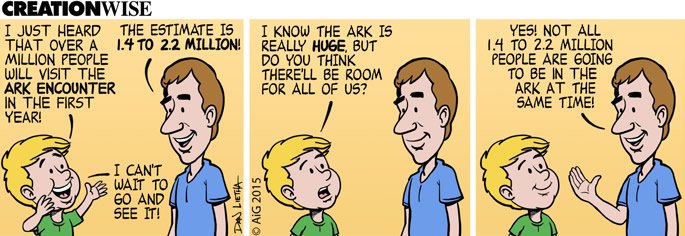
Weekly Cartoon


Next Issue: It's Columbus, I Mean...Leif Erikson Day?

Friday, October 9, 2015

Dr. Steve Creates Biblical Leviathan? AKA, Super Croc!

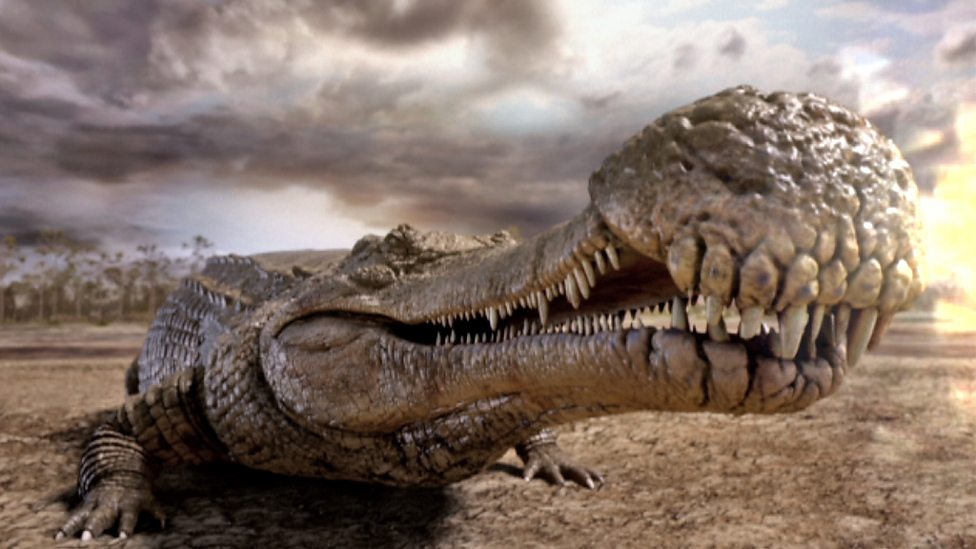
Seti the Sarcosuchus is the newest creature to come out of Dr. Steve's lab! Continue reading to learn about the surprising discoveries surrounding this creature. (Photo Credits)
Over the past several years, Dr. Steve Stevenson has cooked up some strange and bizarre creatures in his lab in the Animal Adventures Institute (AAI). Like in 2012, he brought the saber-toothed mammal-like reptile Inostrancevia. I didn't even know there were other animals with saber-teeth other than the famous saber-toothed cats! Another instance was in 2014 when he and his assistants cloned the strange semi-aquatic fish-eating Suchomimus. But all that pales in comparison with the creature accidentally released last Saturday!

It was a normal day (isn't that how most bizarre or really unusual days start?) in Animal Adventures Inc. when some loud noises were coming from AAI. Confused, my trusty, junior photographer, Daniel P. Smithwater, myself, Lizzy the Lizard, one of my reporters, and Jack the Jack Rabbit, our intern, and some other Animal Adventures Inc. residents headed over to the institute to find out what was going on in there! “We've heard strange noises coming from the institute before,” says resident vet Elizabeth Sorkin, “but nothing like we heard today!” We were shocked by what we found!

After reaching the building, the doors to the entrance were being hammered against by something inside, and it was big...really big. A few seconds later, the doors flung off their hinges and mist poured out of the lab as a large reptile came out into the open. With a long toothy snout, scaly hide and a long flexible tail, the creature we saw was a crocodile, but this was no ordinary crocodile: it was longer than a school bus! The crocodile released a loud intimidating bellow and Dr. Steve and his main assistant Oliver Oviraptor followed the beast out so they could explain to everyone what just happened. When asked what was going on, Dr. Steve was quoted for saying, “We're sorry for the inconvenience everyone. He was a bit too determined to get out.” Later, he explained what this monster crocodile was: “He's a Sarcosuchus imperator, meaning 'flesh crocodile emperor', and his name is Seti, after the ancient Egyptian pharaoh. Some people call Sarcosuchus 'Super Croc', because of its size. I guess he really wanted to get out of the institute, so he barged out the door. He's one of the most powerful animals we've ever cloned in this facility.” Fortunately, Seti had been “tamed” so that he wouldn't start attacking people. I then asked him why Seti was released so early (Dr. Steve usually releases his animals from the hatchery sometime in December or January). He is quoted for saying, “It wasn't really up to us. For some strange reason...”(he glared at Oliver)“...it appears someone, and I'm not saying who, but someone fed Seti the wrong amounts of organic growth enhancers, allowing the animal to grow quicker and mature faster. Our other cloning projects haven't left their eggs yet!”

One of the residents present last week was Dr. Samuel Adamson, the company's chief paleontologist. He was astounded by this impressive beast. “I'm glad to see the Sarcosuchus specimen we brought back not long ago contained usable Sarcosuchus DNA,” he said. I asked the paleontologist what information he could give me about Sarcosuchus. He said, “Sarcosuchus is the largest crocodile that ever existed and its fossils have been discovered in northern Africa. It lived in the world before Noah's Flood, about 4,350 years ago and grew over 40 feet long and weighed 8-10 tons! It's simply a huge beast! This crocodile lived in the same environment as many African dinosaurs that we've discovered; and unlike many of Sarcosuchus' Cretaceous crocodilian cousins, it didn't walk with dinosaurs, it ate them! This was a reptile capable of taking down medium-sized dinosaurs!”

Seti the Sarcosuchus was certainly an impressive creature, but there was something else about this crocodile that amazed us: it actually breathed fire! Yes, you read that right! Sarcosuchus is a giant fire-breathing crocodile! I was blown away and speechless (thankfully, no one caught on fire that day!). Of all the animals I've seen in my life, I've never seen one that breathes fire! It was almost like Dr. Steve had brought a fire-breathing dragon of ancient myth and lore to life. That's not the only incredible thing Dr. Steve and Oliver discovered about the crocodile they cloned. Oliver is quoted for saying, “We found Seti unusually tricky to manage. He didn't try to eat us or anything, but when he was a youngster, we had to keep him in a designated area so he wouldn't accidentally burn down the place or our other research. Thankfully, Sarcosuchus seems [to have] a limit on how much fire it can dispel at one time. We're still looking for what part of its body this creature uses to create fire, however. In...addition to the discovery that the animal can breathe fire and smoke, we also discovered its hide is extremely tough. The Sarcosuchus has almost impenetrable scales, or osteoderms, on its back that act like shields. Even its underbelly is protected with tough scales, unlike the underbelly of modern crocodiles. Most of this we'd never know if we hadn't seen the live animal.”

Upon observing Seti, Dr. Samuel Adamson quickly realized that Super Croc was very similar to an animal described in the Bible, specifically Job chapter 41. “In the book of Job,” Dr. Samuel explains, “God is talking to a man – who's name is Job – about many of the animals He'd made. The last creature He discusses is a creature He calls 'Leviathan'. Now the Bible says that Leviathan was a semi-aquatic monster that terrified even the mightiest and bravest men. Its mouth was ringed with fierce teeth and its body was covered in tough scales (some Bible translations actually describe them as shields) that were so closely-knit that not even a sword or javelin could pierce through it. But...what was unique about this creature was that it could actually breathe fire and smoke!” I asked the scientist what most people identified Leviathan as. He is quoted for saying, “Most identify Leviathan as being a modern crocodile. But no crocodile today breathes fire! So Leviathan must have been a creature that's now extinct. Some creation scientists have proposed that Leviathan is a marine reptile such as the pliosaur Kronosaurus or the giant sea-going lizard Tylosaurus. However, the Bible talks about Leviathan leaving trails reminiscent of potsherds in the mud – meaning this animal was able to come on land. The creature I believe Leviathan may have been was the giant crocodile Sarcosuchus. Super Croc certainly fits the bill!”

As Sarcosuchus is essentially a large crocodile, it will move into the crocodiles' apartment room in the Animal Adventures Inc. main building, which features a pool, underwater tunnel that connects to the property's lake and a heat pad so the cold-blooded reptiles can warm themselves easily. Of course, it will be substantially larger than the now-second largest crocodile on the property, 16-foot Dylan, the Nile Crocodile.

“We might have to make some adjustments to the crocodile apartment room to account for Seti,” Dr. Steve Stevenson said. “But I think we're all glad to welcome this creature to this property, because Sarcosuchus imperator – Super Croc – is, simply put, a beautiful and awe-inspiring reptile!”

Written by: Mr. Smiley
Photographer: Daniel P. Smithwater
Edited by: Christian Ryan

Weekly Cartoon
 

Next Issue: TBD

Friday, September 25, 2015

Rerun Article: Dinosaur Park: Invader...Is It Worth It?


A screenshot from the game Dino Park: Invader, a game which could have been one of the best games ever created.
Several weeks ago, I wrote an article concerning a new game that just came out on May 21, 2014 called Dino Park: Invader, created by the computer game company Unimaginable ©. As I said in the previous article about the Dino Park: Invader, it's supposed to be an action-packed dinosaur adventure game where your character has to try and make it off the island alive. I especially was excited about the game because . . . you guessed it: the dinosaurs! Dinosaurs are awesome! Well, the game has been released and people were so excited about it, that they bought a copy of the game in droves. They knew they were going to love it!

My trusty, junior photographer, Daniel P. Smithwater, Lizzy the Lizard and I also bought a copy of the game. I was so excited to finally be able to play it . . . when my computer crashed! So I rebooted my computer and tried it again. But it crashed! So I tried it a third time and it crashed again! I was getting really disappointed. So I had our Animal Adventures Inc. computer specialist, Mango the orangutan come and take a look. He figured out that I couldn't press any of the keys on the keyboard for the first few seconds while the game was loading up. Go figure!

While Mango was checking out my computer, Lizzy phoned a few friends who had also bought the game; some of Lizzy's friends were having trouble with their computers too! Mango told me that my computer wasn't the problem – the CD-ROM itself was. Oh well. Fortunately, I was able to play the game . . . finally! I wasn't able to finish it before I had to get the article you're reading done, so I'll summarize the game experience based on what I've played so far, what other people have told me and what the game's head developer Tyson Cortes has to say.

First of all, you might recall from the previous article we wrote about the game was that the game was originally pitched to have 16 exciting levels. Well, there aren't quite as many levels as initially planned! You can look at the list of the levels supposed to be in the game by clicking this link, and below you can see the levels that made it into the game:
  • The Beach
  • The Open Woodland
  • The Jungle
  • The Jungle #2
  • The Worker Village
  • The Laboratories
  • The Mountain Forest
  • The High Cliffs
  • The Communication Center
  • The Race to the Helipad
Six levels were taken out! Many levels were combined in the game's final cut. For instance, a level known as The Sauropod Valley was mixed into the Open Woodland level. Also, I and many other people had to work through a few more computer crashes to play! Fortunately, I didn't have any more after I finished The Beach level.

The 3D environments in the game are very nice, but you can't always enjoy them. In one level – The High Cliffs – there's this overlook where you're supposed to be able to look over the edge of the cliff and admire the view. I didn't get to that point in the game yet, but for many people, their computers crashed when they tried to look!

Each level also has a certain amount of puzzles to solve; some are cool, but others are so many and close to each other that they get kind of annoying.

Some of my friends who played the game found it hard to move Annie (the only playable character in the game) around without killing her. Sometimes a fall of only three feet would drop her health level to zero. I never had that problem though.

Sooner or later, I just had to mention the dinosaurs that the game features. The original pitch for the game was for there to be 27 dinosaurs that you'd have to encounter throughout the game. You can see that list here. And you guessed it, the number of dinosaurs is far less in the actual game:
  • Tyrannosaurus rex
  • Velociraptor
  • Triceratops
  • Brachiosaurus
  • Parasaurolophus
  • Acrocanthosaurus
  • Albertosaurus
  • Stegosaurus
  • Sinornithosaurus
  • Spinosaurus
  • Ceratosaurus
Only 10 of the original dinosaurs remain in the game. A new one – Parasaurolophus – was added, however. Now, according to Tyson, the different dinosaur individuals were supposed to have different “emotions”; I'm not talking about emotions like happy, sad or embarrassed though, I'm talking about ones like: hungry, territorial, placid, sleepy and etc. But there are only two in the game: a combination of territorial/hungry (for carnivores) and placid (for herbivores).

Now about the graphics of the dinosaurs – they move pretty unrealistically. Most of them walk almost as if they're on stilts! Their legs are stiff and there's no knee to speak of. However, there are some positives concerning the dinosaurs in the game: they can surprise you when they're on the hunt. Raptors will work as a pack to bring you down, Ceratosaurus ambushes from the shadows, Sinornithosaurus tries to attack you from the trees and Tyrannosaurus and Acrocanthosaurus are better at strategy hunting than you might expect!

So why was the game so buggy and worse than it was supposed to be? Well, I put that question to the game's developer, who's quoted for saying, “Dino Park: Invader was supposed to be one of the greatest games ever created. It was supposed to combine great storytelling with wonderful graphics. As we kept telling the public about the game to get their expectations high, we realized that we needed to continue pushing the envelope. It turned out that we'd pushed it too far; the deadline was close and we bug issues to resolve. Unfortunately, time wouldn't permit and we had to release a buggy game to the public.” He went on to explain that he wasn't too happy with the results, but he had no choice, as he didn't want to keep the public waiting. And concerning why so many levels and dinosaurs were missing, he said, “We were having more computer bug problems with those dinosaurs and levels than the ones we included in the game.”

I then asked him if he considered improving the game any and if he thought it would help the games now-infamous reputation. He smiled and shook his head. “I'm afraid not,” he explains, “you see, the game's already been officially released. The critics have said their final words and that's how the game will likely be remembered. However, we do plan to release patches for people to download. These patches will help fix up the game so it's less buggy.”

Despite his failure, Tyson doesn't feel as if it's a total loss. “Sure I wanted the game to be a success, but it wasn't. We failed. There's no denying that. I like to look at this as a learning experience. Unimaginable © learned from its mistakes and will do better with its next game.”

In closing, I decided to ask what game his company was going to create next. “The Lost World,” he says, “based on Arthur Connon Doyles book and the 1925 movie version and 2001 television version inspired by it. We're going to do something with dinosaurs once again, and this time we'll get it right!”

Written by: Mr. Smiley
Photographer: Daniel P. Smithwater
Edited by: Christian Ryan

Weekly Cartoons


Next Issue: AAI Clones Biblical Leviathan?

Friday, September 18, 2015

Polar Bear Plight Exaggerated?

Are polar bear numbers declining from global warming as much as we think? Perhaps not! Read on to find out the truth!
We've all seen the popular images of polar bears floating on fractured sea blocks in the Arctic, or seen those video clips of polar bears swimming miles out to see, trying to find fragments of sea ice for them to live upon. If alarmists are to be believed, polar bears are dying out at an alarming rate because the icecaps they need for survival are disappearing; and it's all our fault because we release deadly amounts of carbon dioxide into the atmosphere via automobiles via factories. But how much of this is true? Well, recent studies of polar bear populations in Pamiuq Peninsula about 50 miles northwest of Nome, Alaska suggests that this might not actually be the case.

First of all, what is this Pamiuq Peninsula? Well, it's a relatively small peninsula, “about 200 miles north of freezing and 200 south of frostbite”, as the locals say. Pamiuq Peninsula gets its name from the Inuit (otherwise known as an Eskimo) word “Pamiuq”, which means “seal tail”, because the Inuits who first arrived in this area about 4,120 years ago thought it looked like the tail of a seal. One of the animals these Inuit pioneers encountered still strikes us with fear and wonder today, the polar bear. Polar bears began to inhabit the northern polar regions of our world around 4,150 years ago; descending from a population of brown bears, Ursus maritimus adapted to survive in one of the coldest climates on earth. Everything about the polar bear is designed to keep it alive in the frigid arctic: it has two layers of fur (one for warmth and the other to keep its body dry when swimming), black skin (which helps it to retain warmth), claws for digging through snow, catching prey or to keep them upright on slippery ice and an excellent sense of smell, capable of sniffing something out from over 20 miles away.

With all these adaptations, it makes sense that people would get worry about the polar bear's survival if global warming caused the ice and snow in their habitat to melt. Many of these alarmists, such as meteorologist Dr. Bill Manly, is quoted for saying, “Global warming...[is] a real problem that is occurring as we speak! Resent studies have concluded that if global warming doesn't stop, the sea ice in the polar regions will be gone by 2040, polar bears won't have a place to live and sea levels will rise to over 20 feet above their present level. We must act now to save our planet from [this] global crisis! Polar bears will suffer! We will suffer! The planet suffer!” But how true are these claims in regards to polar bears? Well, my trusty, junior photographer, Daniel P. Smithwater, and I went to Animal Adventures Institute's head zoologist (and certified ecologist) Dr. Arizona Stevenson, who was actually involved in the recent polar bear population study in Pamiuq, to find out the truth.

“In 2012,” Dr. Arizona explained, “I became involved with PESP, the Pamiuq Ecological Surveillance Project. Set up in 1985, this project started it up so that scientists could constantly keep track of how healthy the animal population is in that part of Alaska. We especially wanted to find out how the animals were doing despite threats of global warming.” And according to Dr. Arizona, the results are nonetheless surprising. One of their primary focuses was the apex predator of the region: polar bears. In order to learn how the polar bears were coping, they looked at everything: how many cubs were being birthed each year, how were the fish and seal stocks (seals are the favorite food of polar bears), and how much the climate and environment (e.g. amounts of sea ice developing each year) had changed in the past several years to see if a warming trend was visible.

Dr. Arizona is quoted for saying, “Essentially, what we found that the reports – even peer-reviewed ones – that spoke of doom for polar bear populations as sea ice vanished were a bunch of hogwash, (or rather, bear-wash).” The original studies done on polar bear populations in the Pamiuq area and the other 18 bear populations worldwide, concluded that, yes, polar bear numbers did drop...but the drop was between the years 2004 and 2006. “But what they didn't mention,” Dr. Arizona further explained, “was that polar bear numbers worldwide (especially in Davis Strait, in northeastern Canada and Pamiuq Peninsula) actually increased in 2007, and again in 2010. Yet, the decline in sea ice remained the same.” In fact, polar bear populations in Pamiuq had grown from a measly 850 bears when the research here began in the mid-80's, to over 2,100 as of last year! Talk about population BOOM! “Many people try to claim that polar bears are endangered,” Dr. Arizona says. “But they're not.” In addition to this, Dr. Arizona's team concluded that the assertions that sea ice would be absent by 2040 and that the sea levels would rise 20 feet to be unfounded.

Animal Adventures Institute's chief paleontologist Dr. Samuel Adamson, also had something to say regarding the study. “We shouldn't really be surprised to find an unstable climate,” he says, “in fact, it's been changing ever since the Genesis Flood described in Genesis 6-9 in the Bible occurred! Soon after the Flood, we find evidence of rainforests stretching as far north as Alaska and Germany, all the way down to Antarctica. It was literally a 'greenhouse earth'. Afterward, the planet got cooler and drier as the Ice Age came forth; this time in history, the earth was held in an icy grip. Enormous glaciers, some over 2,000 feet high, covered 1/3 of the total land area. Since the Flood, earth's climate has never been stable.”

Since polar bears clearly aren't threatened by global warming as we once thought, that must mean we don't need to be concerned about them, right? Dr. Arizona doesn't think so. “Polar bears are considered a vulnerable species,” Dr. Arizona explains, “meaning they could become endangered in the future if we're not careful about our actions. There are many things threatening the lives of polar bears that have nothing to do with global warming. Pollution in general, oil and gas development, habitat loss, and with some populations, illegal hunting practices, are doing these bears harm. If we want to have polar bears in our future, they must continued to be monitored and protected.”

Written by: Mr. Smiley
Photographer: Daniel P. Smithwater
Edited by: Christian Ryan

For more information on how polar bear populations are really fairing, please visit the two links below:
http://www.csmonitor.com/2007/0503/p13s01-wogi.html
https://answersingenesis.org/reviews/movies/arctic-tale-exaggerating-the-effects-of-global-warming/


Weekly Cartoon


Next Issue: TBD


Friday, September 11, 2015

The Rampage of the Tusked Maurader

A creature known as the "Tusked Maurader" supposedly terrorized a busy highway a few years ago.
Note: I was rummaging through some old files when I found this article someone had written years ago. Because I could not confirm who wrote this report, its authenticity is up in the air. Lizzy the Lizard thinks its a fraud. Even though this article claims I wrote and did the interviews it features, I'm pretty sure I'd remember if I conducted the interviews, don't you think? Despite having its authenticity in question, I still thought that this article would be a good read.

The Great Pumpkin, the Saber-toothed Assassin, the Mouse Lake Monster . . . these are all cryptids that have been recently cited in and around Riverville. Now we have another cryptid report from I-52 that leads into Riverville itself, but this time it made its appearance in front of a lot of people! About 10:00pm, droves of cars were riding along the highway when they started experiencing major delays and road jams. The cause? Some large mammal was said to be causing all the commotion. As soon as I heard about the incident, my trusty junior photographer, Daniel P. Smithwater and I rushed out to the interstate to get some exclusive interviews. Unfortunately for us reporters, the authorities kept us away from the apparent creature sighting site until much later, so instead I merely interviewed some eye witnesses to wrap my head around what happened that night. One such eye witness, Janet Cutter, was quoted for saying, “I was driving along the interstate at around 10:00pm to pick up my husband from the airport with my five-year old son, Jake when we had a huge traffic jam. I waited for about five minutes and that's when people started running past my car as if they were terrified of something.” She then explained that she was parked behind a large truck at the time, so she couldn't see what was going on ahead of her when suddenly, a small car came whizzing through the air from in front of the truck and landed on the side of the road (thank goodness no one was in it!). “That's when I started screaming,” says Janet. “Then a heard a loud trumpeting sound and . . . [it] sounded like an elephant's, but I wasn't sure. As I waited in the car, the truck in front of me was knocked to the side and I saw the culprit, though it was hard to see because it was so dark.” When asked what the creature looked like, she said that when she saw it, she continued screaming. Janet described the beast as very elephant-like in appearance; complete with a long trunk, tusks of almost imaginable proportions, and a large body, much larger than any elephant she'd seen before. “It was too large to be an elephant,” Janet told me. That was all Janet had to say so I interviewed a man by the name of Noah Tompkins, who was stuck in traffic with two of his friends while trying to get home and was also surprised by what he saw. Noah is quoted for saying, “It was way too big to be an elephant, dude. But it was like, totally awesome! It had the typical elephant shape, but its tusks were super long, dude.” When asked what he saw of the creature, he responded saying, “. . . it was like, way too dark, dude. But one of my friend's, Timothy Carter was like, “Come on, what'up dude? What ya wait'in for? Snap a picture before it gets away!' Fortunately I was able to snap a picture of the animal on the highway before the authorities rescued us from our car.” When I got a hold of the photograph Noah took, Daniel and I had a hard time making out what it was, but we could see that it was definitely an elephant like creature. This is the time many people started calling it the “Tusked Marauder”, even though it didn't kill anybody. However, the animal did upset a few people – trucker Danny Phelps was driving his fruit-filled truck down the highway when he got stuck in traffic and after the authorities rescued him, he went back to his truck to find it busted open and many of the fruits were either squashed or gone. “It must have eaten all the fruit!” Danny says. “I had a variety of mangoes, bananas, strawberries, blueberries . . . [a lot of other stuff] and all two tons of it was history! After a long five-hour drive from my supplier, I wasn't expected Jimmy's Grocery Store's next fruit shipment to bite the dust.” None of my interviewees were able to tell me what happened to the animal after the authorities rescued them from their vehicles, so it is therefore assumed that the authorities did something with the Tusked Marauder before reporters like me could go in and get a good photograph of it. Upon going back to Animal Adventures Inc., I showed the photograph to the company's head paleontologist, Dr. Samuel Adamson. He said, “I must say, it looks a lot like an elephant. It doesn't look anything like the elephants we have around today though, so I'm assuming that it's a mammoth . . . if the photo has not been photo-shopped, that is.” When asked what type of mammoth, he replied, “I believe that if the photo is accurate, this creature is a Colombian mammoth, one of the largest elephants that ever existed. There were still many of them roaming around southern North America 2,000 B.C. Unlike the more famous woolly mammoth normally found further north, Colombian mammoths were a fairly hairless species.” It seems that these cryptids keep coming and coming. As your trusty reporter Mr. Smiley, I can safely assure you that whenever the next one appears, I will be on the case, ready to get a good story.

Written by: Mr. Smiley
Photographer: Noah Tompkins
Edited by: Christian Ryan, Joy Hammond

*Advertisement*

We here at Smiley’s News, I have been working night and day to get articles ready. I could really use some help! So we are looking for people interested in writing (especially kids and teens). If you are interested, PLEASE(!) send an email to animaladventures@aol.com and save me from working night and day! I’m exhausted!


Weekly Cartoons


Next Issue: Polar Bear Plight Exaggerated?

Friday, September 4, 2015

Dr. Samuel Adamson's Fossil Discovery Report for 2015

Dr. Samuel's life-long dream of discovering the fossils of Sarcosuchus, one of the biggest crocodiles ever to exist, finally came true this past summer.
As with several years in the past, Dr. Samuel Adamson (head of Animal Adventures Institute, aka AAI paleontology department) and his dig team spent the summer months exploring different regions (rock formations to be more specific) of the world to look for fossils of dinosaurs and other extinct animals. Every time they go out, they've returned with many great fossil discoveries. For example, in 2012 they brought back the rare fossils of the saber-toothed gorgonopsid Inostrancevia and the even rarer fossils of the dragon-headed Dracorex; in 2013, he and his wife accidentally discovered what appear to be a pair of baby Spinosaurus turned into mummies by ancient Egyptians, dug up some of the first fossils of the at-the-time new dinosaur from Alberta, Albertadromeus, and found soft tissue-yielding remains of an Acrocanthosaurus; and 2014 brought on the discovery of a Cretaceous dinosaur runway, evidence that the hadrosaur Edmontosaurus had a head crest, uncovered fossils of Suchomimus, Pachyrhinosaurus, and Amaragasaurus. Where did Dr. Adamson go this year and what discoveries did he and his team make?

To find out, my trusty, junior photographer, Daniel P. Smithwater and I took it upon ourselves to visit the paleontologist at the AAI as his men loaded the crates holding the fossils into the building. “We've been all over the world,” says Dr. Adamson. “During the summer, I was overseeing fossil excavations in five fossil-bearing rock formations. We excavated in Yixian Formation in the Liaoning Province of China, the Elrhaz Formation in Niger, Africa and the Cleveland Shales in Ohio. At each site, we found new and exciting fossils.”

As usual, even though soft tissue – and with it, DNA – is often discovered in the fossil remains they find, Dr. Adamson confirms that this is not the primary reason for excavating the bones. Dr. Adamson is quoted for saying, “We aren't digging to find ancient DNA we can use to clone these beasts. We want to learn more about the ancient world. The DNA is a nice side-effect.”In this year's dig, he is especially proud of his fossil finds in the Yixian Formation. He told me that the rocks making up the Yixian Formation were laid down during the global Flood of Noah's time, about 4,350 years ago, as is the case with all rock formations in Cretaceous rock layers and further down in the geologic column. Before the Flood, the Yixian was one of the many unique ecosystems that existed in the pre-Flood world. “The Yixian,” Dr. Adamson said, “us a wide variety of creatures. Fossils of shrimp, insects, birds, small mammals (one called Repanomamus even ate some dinosaurs for lunch!) and dinosaurs have been found here in abundance. But one apex predator ruled them all, and Dr. Adamson's team actually found one. It's called Yutyrannus huali, a 30-foot long relative of Tyrannosaurus rex. “We found one partial specimen of Yutyrannus on this trip,” Dr. Adamsons says. “It's relatively complete and pretty well-preserved. I'm particularly proud of this discovery because Yutyrannus is still relatively new to science; it was only scientifically described in 2012! Unlike its cousin, T. rex, Yutyrannus would have been considerably more lightweight, meaning it could run far faster, probably up to 30 mph. (T. rex could only run about 18-25mph) I wouldn't want to run into this monster in a dark alley, or out in the open in broad daylight! Yutyrannus was the largest predator in its habitat, the only other animal it feared was another Yutyrannus.”

Yutyrannus wasn't the only extinct animal Dr. Adamson discovered this year – they also made some accidental discoveries when they were switching planes in Ohio. Indiana Adamson, Samuel's wife, explained the whole incident to me. “We had just got off the plane that took us from Utah to Ohio,” she said, “and we had to wait a whole day until the next flight out to South Carolina was scheduled (from there, they were going straight to China). So...[while we were] in the airport looking for a place for the dig team and ourselves to sleep for the night, my husband bumped into one of his paleontologist friends from college. Ha, ha. Wouldn't you know it? It turned out he had a team of his own at a dig site nearby, so, naturally, we all went to check it out. The dig site was located in the Cleveland Shales of Ohio and contained fossils from a pre-Flood Devonian habitat.” The Devonian was another pre-Flood ecosystem. It was filled with many different forms of marine life, including many we're familiar with today (sea stars, jellyfish and even sharks). Many of the fish in the Devonian were covered in armor to protect them from predators or enemies. Dr. Indiana continued, “He was showing us some fossil ammonites when I spotted some peculiar fossils in the ground near my feet. It turned out to be part of the skeleton of a colossal fish called Dunkleosteus. Dunkleosteus was a 20-30-foot carnivorous armored fish with huge jaws.” According to Dr. Samuel, this fish had no teeth in its jaws; instead it had a “shearing plates in its mouth, meaning that while a shark could use its teeth to slice into the flesh of prey like a knife through butter, Dunkleosteus could crunch its prey in half!” The Dunkleosteus was very incomplete, but enough remains were found to tell the scientists the exact species and size of the animal. After discovering there was a Dunkleosteus buried at the dig site, the Adamson's decided to postpone their trip to China so they could assign a portion of the team to help Dr. Samuel's friend's team dig up the specimen. “It was an initial inconvenience,” Dr. Samuel said, “but it all worked out in the end.”

Having been to Ohio and China, you might think that all the amazing fossil discoveries was over. Not by a long shot! Next, after getting a portion of the entire dig team started on excavating the Yutyrannus, Dr. Samuel, his wife and the rest of the team flew to the Elrhaz Formation in Niger. They'd been to this place before just last year when they found the fossils of Suchomimus. Upon their return to this place, they found several fish fossils. Even though this site is a desert today, the environment represented here  in the rock is reminiscent of an ancient, pre-Flood swamp. “That's why,” Dr. Samuel said, “we find many water-dwelling and semi-aquatic creatures here. Last year, we found the fossils of a Suchomimus, a large dinosaur that spent a lot of time in the water, catching fish and other aquatic prey.” Suchomimus wasn't without its competition for stocks of fish it wanted, there was an even larger predator lurking in the waters. “Perhaps the most impressive animal we discovered this year,” Dr. Indiana said, “is Sarcosuchus imperator, a large crocodile that grew over 40 feet long. It was so big, that it could hunt dinosaurs!” She also told me that this impressive beast would have acted much like modern crocodiles, lying near the water's edge until prey came by for a drink. Then it would leap out, snag its prey and pull it underwater to drown it. The skeleton of the Sarcosuchus is relatively complete, especially the gorgeous skull. “At the end of the animal's snout,” Dr. Indiana further explained, “there's a strange, hollow, bulbous structure. It's driven scientists crazy ever since the first Sarcosuchus was discovered because we've been unable to find out what it was used for. Perhaps, if there's enough soft tissue preserved in the fossils, we can bring this creature back to life and find out for sure.”

In addition to these amazing discoveries, Dr. Samuel also reported finding isolated Nasutoceratops fossils right outside of Riverville, Utah, a lot closer to home! Now that the fossils have been safely shipped back to Animal Adventures Institute, they can be thoroughly studied by the chief geneticist, Dr. Steve Stevenson and his assistants. We won't know how much soft tissue the fossilized remains contain, nor what other mysteries might lay in store, but things are going to be pretty busy in the upcoming months at the institute!

“The fossil excavating season maybe over,” Dr. Steve says, “but the real fun and joy of scientific discovery begins right now!”

Written by: Mr. Smiley
Photographer: Daniel P. Smithwater
Edited by: Christian Ryan

Weekly Cartoon

Next Week: Rerun Article: School's Buzzing at Snowflake's Christian School for Animals

Friday, August 28, 2015

Rerun Article: Monster Hoax or Truly Beast?

The Saber-Toothed Assassin (top), was supposedly seen last Tuesday night by Mac Dee Dee who's meat crate it ripped open (bottom).
You might recall that in the past, we've written on some strange creature sightings in the past (e.g. The Great Pumpkin and a strange weasel-like mammal), and for the past few months, Riverville has been sort of quiet in this department because we haven't had any strange creature sightings . . . until last Tuesday night. Just when we thought all was quiet, another one of these unidentified creatures, known as “cryptids”, makes its presence known at Mac Dee Dee's Farm, the same farm that opened just a few weeks ago. When a cryptid was sighted at the farm, my trusty, junior photographer, Daniel P. Smithwater and I went over to the farm to get an interview with the farm's owner, Mac Dee Dee. “It was about 10:00 p.m. and I was sitting in my office about to go lie down for some shuteye,” says Mac Dee Dee, “when I looked up at the computer monitor that was connected to the security camera's we have outside and I just barely noticed a large creature run through the woods near the place I keep one of my tractor containment crates.” Mac Dee Dee went on to explain that inside the crate was a refrigerated compartment for holding fresh cow meat that was going to be shipped off the following day. Mac Dee Dee was quoted for saying, “But now I can't ship any of that meat off because that creature, whatever it was, clawed it open. It didn't bother to try eating the meat however, I'm not sure why. But just before it left, a pressed the 'snap photo' button on the security camera program and got a good picture of the beast.” Mac Dee Dee explained that his security camera system didn't save video footage, otherwise he would have taken a gotten a video clip of the beast. When I asked to see the photo, he showed it to me. The creature was unlike any wild creature I'd seen before. It was a four-legged, rhino-sized predator with a pair of saber-teeth protruding from its mouth, much like a saber-toothed cat. But this wasn't a cat, in fact, it wasn't even a mammal, but a reptile by the looks of it. Then Mac Dee Dee took us to see the crate the predator had torn through. True to his word, the animal's sharp claws tore right through it and due to the possibility of contamination, Mac Dee Dee had to loose his meats. With Mac Dee Dee's permission, I took the photo to Dr. Samuel Adamson, a head paleontologist at Animal Adventures Institute to see if he could identify the creature for me (I went to him instead of a zoologist because I thought this might be an animal believed to be extinct). He is quoted for saying, “I'm not exactly sure, but this cryptid is, but it looks a great deal like the Permian reptile known as a gorgonopsid. Depending on the species, a gorgonopsid could be the size of a small dog, to the size of a rhinoceros in the case of a species such as Gorgonops and Inostrancevia. But what all gorgonopsids had in common was a pair of saber-teeth that protruded from the top of the jaw.” As you might recall, the head geneticist of Animal Adventures Institute, Dr. Steve Stevenson, has successfully cloned a gorgonopsid named Gordon, but she's assured me that she's not the one responsible for tearing into Mac Dee Dee's meat crate. “I was sleeping like a baby at 10pm on Tuesday night,” she says. “Ask anyone here at the [Animal Adventures] Studios and they'll tell you the same. Besides, if I did sneak out and run to Mac Dee Dee's farm, security would have spotted me.” So with this new cryptid sighting making all the main local news outlets, it's guaranteed that this creature – now being affectionately referred to as “The Saber-Toothed Assassin” by some – is bound to attract some monster hunters, hoping to prove its existence. We may not know if this creature's a hoax or a real animal, but perhaps 21st century technology will help track this monster down before it causes too much trouble, but if its anything like the famous cryptids such as Big Foot, Loch Ness Monster and the Yeti, we could be searching for the Saber-Toothed Assassin for some time to come . . . let's hope it doesn't turn up in my backyard!


Written by: Mr. Smiley
Photographer: Daniel P. Smithwater
Edited by: Christian Ryan and Joy Hammond

Weekly Cartoons

Next Issue: Dr. Samuel Adamson's Fossil Discovery Report for 2015

Friday, August 21, 2015

A Bee-autiful Celebration to Save the Bees

Honeybees, such as this one, are being threatened with extinction from pesticides and other pollutants. Thankfully, people have started to give these helpful insects a helping hand.
Notice: For those of you who don't know, National Honeybee Day 2015 was last Saturday. The article you are about to read was written several days before that point.

As the dog days of summer have just ended and the sound of buzzing is in the air. Yep, that's the characteristic sound of honeybees. Bees everywhere in the northern hemisphere are gathering nectar and making honey to make sure they have enough food to last them the entire winter, when no flowers are around to collect nectar from. Not only do bees produce honey (something many of us can't imagine living without), but they also are one of the most important pollinators we have in nature – if it weren't for them, many plants would be largely unable to reproduce. Unfortunately, bees everywhere (not just honeybees) are disappearing at a massive rate. Why? According to Dr. Arizona Stevenson of Animal Adventures Institute. “Bees are disappearing because the plants which they pollinate are often coated with pesticides. Pesticides may be meant to kill pests that harm farmers' crops, but they harm just about everything else too, including (in the long-term) humans who eat them! We must help save the bees are else a lot less pollinating is going to be going on.”

Thankfully, the bee's cry for help has been heard. Antonio the Armadillo has recently spearheaded a special celebration to occur just in time for National Honeybee Day (“Bee Day” for short). Antonio is quoted for saying, “Honeybees are dying everywhere and people need to know what's going on with them and how they can help save these beneficial insects.” My trusty, junior photographer, Daniel P. Smithwater, and I found Antonio's behavior a little strange regarding the bees. Anyone who knows Antonio is aware that this armadillo is quite the salesman (he used to be a traveling salesman, but upon reaching Animal Adventures Inc. (AAI.) , he decided to stay. Hooray for us.). He's someone who would sell not one, but three buckets of sand to a man in the desert. Normally, his only motive is to make more money. Why would he care about bees? I decided to ask. “Well, bees are very important creatures. They pollinate the flowers, they make honey...and not to mention, many of the products I sell have honey in them. Without bees, I wouldn't be able to sell a lot of my products.”

In order to help bring awareness to the bees' plight, Antonio is organizing AAI.'s Annual Bee Day Celebration. We decided to interview Antonio's right-hand man, Bully the Bullfrog for more details on the festivities. “We've already recruited the help of many AAI. residents,” he says, “to create an elaborate parade, with balloons, floats, animatronic bees, people (and animals) in bee costumes and confetti.”

It turned out that a kid named Ryan Gregor, who's family lives on the property, is helping out with the animatronics. He says, “It's a lot of work to create this event, but it's all for a good cause. So we're willing to do it.”

Antonio's event has been faced with much approval, but also some disapproval by some of the locals. One of them is Mary Montano. She's the owner of Mary's Mall on AAI. property and was previously signed up as a sponsor for the event. But for unknown reasons, she decided to drop out. I guessed that after a recent bee incident, Mary has been somewhat spiteful of bees. When asked why she declined to even attend the celebration, she merely said, “It's weird.” Antonio knows about Mary's objection, and upon me asking about it, he said, “Mary is known to be a bit of an inconsiderate grouch. A bit of a Scrooge. She really seems to be against all things beautiful, lovely and fun...well, maybe just fun, because she has a beautiful mall and lovely decorations in it, but I mean...seriously. She hates fun! You should have seen her last Christmas! She forbid us to set up any Christmas decorations. She even rejected having a live Nativity scene with live animals, after the animals, the actors and the set arrived. That's Mary for you...” then he seemed slightly nervous. “You're not publishing this, are you?” he asked.

The annual Bee Day celebration will be held on Bee Day itself, which this year is on August 15th (it's the third Saturday every August). In closing, Antonio is quoted for saying, “Despite all the bee stings and dislike from certain locals, I firmly believe this celebration will bee exceedingly bee-autiful and completely worth it...especially since it's for everyone's favorite pollinators: the honeybee!”

Written by: Mr. Smiley
Photographer: Daniel P. Smithwater
Edited by: Christian Ryan

Weekly Cartoons


Next Issue: Rerun article

Friday, August 14, 2015

Rerun Article: A Very Sticky Siuation

The maple syrup incident that occurred here in Riverville was a great sticky mess, but it was nowhere nearly as bad as the Great Molasses Flood of 1919, as seen in the photo above.
Last Friday, it was a normal day in Riverville, the town in which Animal Adventures Inc. is located. Birds were chirping, the sun was shining, people were walking to their lunch breaks and children were learning new things in school. I was sitting at my desk finalizing last week's article. But the peacefulness changed at 11:48 a.m. when people near the Dandy Candy Factory heard a loud rumbling noise. People looked at the factory and realized that the sound was coming from a 50-foot tall, storage tank that was 90 feet in diameter filled with 2,300,000 gallons of maple syrup. Suddenly the tank exploded and 2,300,000 gallons of maple syrup spewed out as if from a raging volcano!

Around this time of year, people – kids especially – love candy and sweets, but this was too much! The maple syrup began rapidly flowing through the surrounding area. People began running in terror from the sweet-tasting flood. Mr. Fish came to my office to inform me of what was happening elsewhere in town, so my trusty, junior photographer, Daniel P. Smithwater, and I headed to the scene of the mayhem. Upon arrival, we found ourselves instantly surrounded by city officials – firefighters and police officers – who tried to keep the crowds back and loads of civilians who all wanted to see the action. I couldn't believe my eyes! Loads of maple syrup was flowing freely down the street at 35 mph. Upon its initial release, the wave of syrup was 25 or so feet high and as it continued along its path of stickiness, it leveled out to 3 feet in depth!

I spoke with police officer David Tooters to learn more about the situation at hand. He is quoted for saying, “No one knows as of yet why this happened, but we do know that we've got to rescue as many people as we can before anyone gets hurt. Maple syrup is only good in small doses.” Due to the dangers of the situation, I wasn't able to get very close, but from what I could see, the syrup was a powerful force. Some people were being quickly swept away by the torrent. At times, the firefighters blasted the maple syrup with high-pressure water hoses to make a pathway to the helpless people stuck in syrup. At one point during the day, the syrup even trapped someone's horse! Fortunately police were able to rescue the creature without injury to themselves or the animal.

After what seemed like hours of saving people and animals from the mess, some large snowplows were brought in to move the syrup. This went on until about 6:00 p.m. and finally the majority of the syrup had been swept away to someplace where it would be of no more danger. (I was unable to verify where). One question that was still on my mind was why the syrup exploded in the first place. To answer this question, I checked with CEO of the Dandy Candy Factory, Danny Scrumptious. He is quoted for saying, “Well at the time we were heating the maple syrup because we were preparing to start packaging it up to ship to grocery stores, and one of my workers, named Phil Tumor, was in charge of the operation. Phil decided to take a lunch break, accidentally left the heater on and the heat pressure built up so much that . . . well, I think we all know what happened.”

Then, I asked Danny if they had ideas on how to prevent this from happening again. “Of course we do,” Danny says, “for starters, we're not going to allow people working with the maple syrup to take lunch breaks or any type of breaks until after the heating process is over. We're also going to make some adjustments to how the whole system is run. We definitely don't want this to happen again, because not only was that lots of money wasted, but civilians' lives were put in danger.”

Thanks to the quick work of city officials, the syrup was cleaned up and no one was injured in the event. Now that its over, what happened today brings a whole new meaning to the phrase, “There is such a thing as too much sweets.” Keep that in mind this October 31st!

Written by: Mr. Smiley
Photographer: Daniel P. Smithwater
Edited by: Christian Ryan

Weekly Cartoon


Next Issue: A Bee-autiful Celebration to Save the Bees

Friday, August 7, 2015

The Boa Constrictor Killing Method

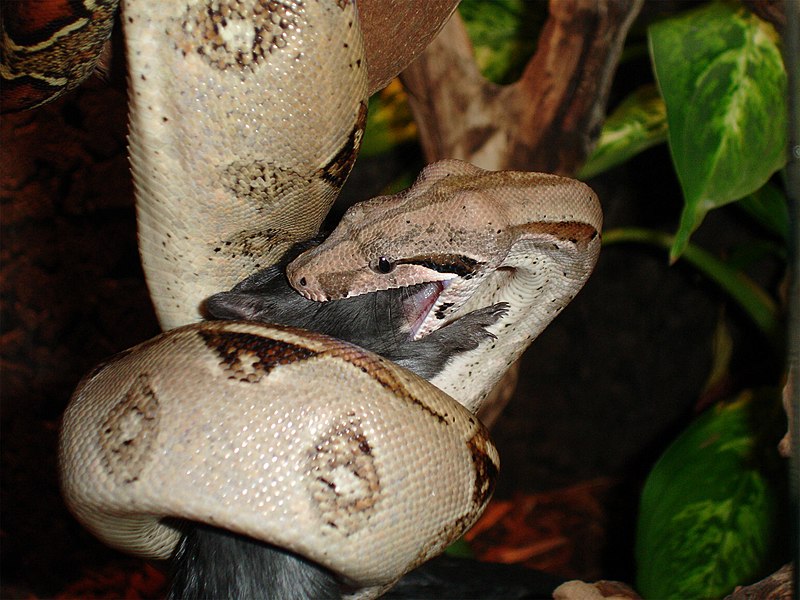
Previously thought to kill their prey via suffocation, new studies reveal the real horrifying method boa constrictors use to put their prey to death! (Wikimedia Commons)
The boa constrictor is one of the few snakes animals organisms on the planet that people commonly refer to by using its scientific name: Boa constrictor. But for those who are unfamiliar with this serpent, it's a moderately-sized species of boa (still smaller than the anaconda, reticulated python and several others) that makes its home in Central and South America, living in habitats as dry as semi-desert country or as wet as the tropical rainforests. They can grow up to 10 feet long and weigh 22 to 33 pounds on average. This popular species of snake is known for being a constrictor, the group of snakes famous for constructing their prey to death in tight coils that causes the prey to die of suffocation. But guess what! A new discovery confirmed that this isn't really the case during an attack from one of these snakes!

A group of scientists from around the world decided to study how boa constrictors and their relatives, like the anacondas (yes, the anaconda is a species of boa), capture and kill their prey. It turned out that these snakes don't actually kill their prey by suffocation as has long been believed – instead, prey dies due to...blood constriction! Gosh, and I thought the boa's method of killing was nightmarish enough as everyone once thought it was! To get the full scoop on this discovery, my trusty, junior photographer, Daniel P. Smithwater, and I decided to pay a visit to one of the scientists involved in the study who actually works right here at Animal Adventures Inc.'s Animal Adventures Institute: Dr. Arizona Stevenson.

Dr. Arizona Stevenson, a personal friend of mine, is a zoologist and was surprised by the discovery they made. She's quoted for saying, “We initially wanted to study how boa constrictors attack and kill their prey, so we fed them rats and filmed them using slow-motion cameras. But we quickly noticed that the rats were dying too quickly for the cause of their death to be from suffocation.” She also explained that animals can remain alive (in an unconscious state) for longer periods of time than these rats were. “That's when one of my colleagues found a hypothesis put forward by a herpetologist in 1994 that boas don't kill their prey via suffocation, but by cardiac arrest. However, at the time the hypothesis had been ignored and untested.” So Dr. Arizona and her team decided to do just that!

They hooked up some live rats to a machine that would tell the scientists their blood pressure. When the rat was grabbed by the boa constrictor they used during the experiment, they found that indeed, the rat's blood pressure decreased as the snake tightened its coils around its body. “The boa constrictor's grip was so tight,” Dr. Arizona says, “that it cut off the rat's supply of blood to the brain, heart and other vital organs. The rats were out cold within seconds, proving the early hypothesis to be true!”

Dr. Arizona told me that this technique helps the snakes to kill prey far larger than themselves. “It takes a lot more time to suffocate a prey animal – like a capybara or a crocodile – than it does to kill it by cutting off circulation,” she said. “This is a good thing, because since the snakes lack legs, the more time they spend trying to kill their prey, the more time their prey has to potentially injure them.”

Dr. Arizona and the team are very impressed with the amount of scientific research and experimentation they've conducted over the course of the past several months. And since their work has completely debunked older “facts” about these animals, the scientists wonder what other well known animal “facts” that have been considered true for years are false.

“This discovery just goes to show us,” Dr. Arizona says, “that even when we think we know everything there is to know about something – in this case, boa constrictors – we learn that once again, scientific research is there to remind us how how little we really know.”

Written by: Mr. Smiley
Photographer: Daniel P. Smithwater
Edited by: Christian Ryan
Weekly Cartoons


Next Issue: Rerun Article: A Very Sticky Situation